


Last month, I flew to California for my best friend’s wedding.
Separated by 3,000 miles, I hadn’t seen Patrick or his family in over a year. Patrick is the youngest of three sons. His parents just celebrated their 30th anniversary. His dad, Hal, owns a fourth-generation beer distribution business.
At Friday night’s rehearsal dinner, something felt off.
After an hour of catching up with Patrick’s family, I pulled him aside: “Is everything alright with Hal? He seems…off.”
I’ve known Hal for over a decade. A burly Irish Catholic. Never missed Sunday Mass. Loved his family like he loved the Lord. The rare man whose wife still adored him and whose kids didn’t hate him— the true longevity specimen of our day. At his worst, he was still the most charismatic man in the room.
Patrick sighed, looked down, started to tear up: “He’s struggling. Overeating. Not moving. Doesn’t get out of bed until 1 PM. He’s depressed.”
Two weeks after the wedding, I got a text: “Heading home. Dad has pneumonia. I quit my job to take over the business and be with him through treatment.”
Two days later: “Things took a turn. He’s in rough shape. ECMO next.”
This past Monday, I got the text I felt was coming: “My dad passed this morning.”
62 years old.
Hal saw his youngest child get married. He convinced himself his mission was complete on this Earth.
Here’s the harsh reality: if you stop giving the Universe a reason to keep you here, it will violently rip that opportunity from your hands and give it to someone else.
“What does this have to do with the state of our health…”
There’s a deeper point that awoke the sleeping giant this past week as it relates to our side of the health space: we lost the plot when we started replacing vitality with fragility. And vitality is at least half of the longevity equation. Its inverse is doubt. It’s the idea that those who lack the conviction to exist forecast their own mortal demise.
I don’t just say this as a matter of emotional response to a tragic situation. Perhaps partially so. After all, I’ve known Hal for quite a long time. But there’s more to it.
Vitality is rooted in biological truth, though immeasurable. And that’s why we avoid it — because we hate what we cannot measure. It doesn’t fit into our tidy models. It doesn’t match the cleanliness of our spreadsheet health’ing. We can’t quantify elite vitality like we can an inflammatory marker.
We find comfort in “everything will be alright, here’s exactly what to do.” The alternative is complexity and uncertainty without guardrails that we fear will send us spiraling. That’s why we tell ourselves stories. To at least provide ourselves the illusion of understanding the world we reside in.
It’s Nothing New
This idea of vitality has long been established, yet we’re quick to either forget or fail to integrate the core truths of humanity in search for the extension of its own existence.
Schweitzer wrote in Out of My Life and Thought:
The most immediate fact of man’s consciousness is the assertion “I am life that wills to live in the midst of life that wills to live”
Frankl argued humans thrived on what he called the “will to meaning” and suggested without conviction, men succumb to the “existential vacuum".
Nietzsche’s Will to Power hinted similarly at the importance of embracing life’s vitality as a path to fulfillment so as to fuel life’s fire and stave off the fragile self. The unwavering Übermensch was defined by his ability to accept challenges despite adversity and to never be perturbed by the suffering of life.
Even the “Research” Declares It to Be So
I don’t suggest academic research as the final blessing. The unwavering spirit towards life is unquantifiable in every rational sense. Though, consilience — obtaining a similar conclusion via unique vectors — is all the more reason we find this principle to hold true.
One of the landmark studies in this area titled “Purpose in Life as a Predictor of Mortality across Adulthood”1 from Hill & Turiano (2015) suggested those with a higher purpose in life predicted a 15% lower mortality risk.
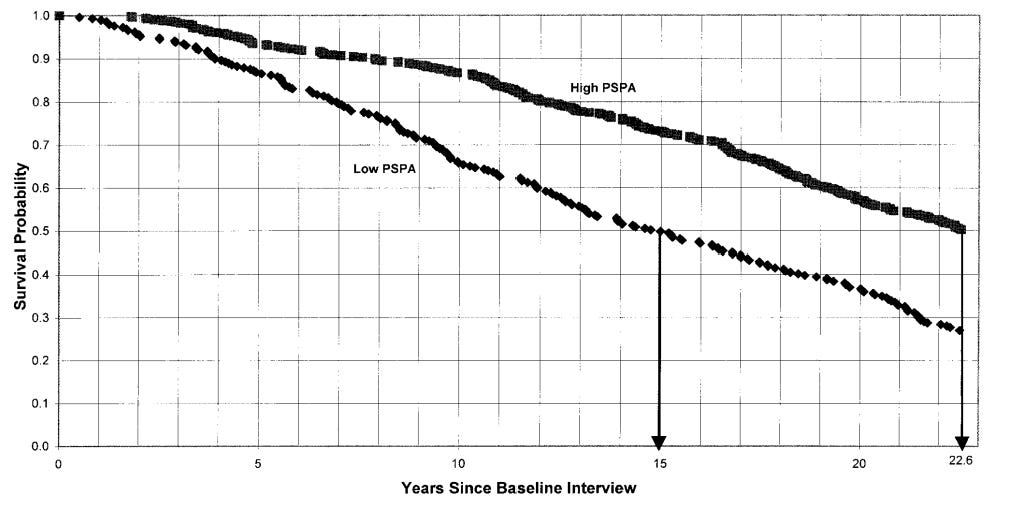
In 2002, Levy et al.2 found those with more positive self-perceptions of aging demonstrated a survival advantage of 7.5 years & every one-point increase in positive perception reduced mortality risk by 13.5%.
The Nurses’ Health Study3 of nearly 70k women in 2019 again showed those in the highest optimism quartile lived 14.9% longer than the lowest.
When we invert this idea instead focusing on the impacts of pessimism on health, we see the detriment of our denial for the will to live. In 2015, Pänkäläinen et al.4 wrote:
“among men in the highest quartile of pessimism, the risk for coronary heart disease (CHD) was approximately four-fold”
How to Build Vitality
N=1 isn’t simply a health meme. All of a life is an n=1 game. You’ll never be able to copy-paste a path or protocol in this life. You might not like it, but there’s a divine reason for it.
The most resilient lives are governed by those who navigate the valley of despair with calm urgency, reach peaks of accomplishment, only to find the valley yet again. They overcome each challenge with a steadfast persistence as a function of their own moral duty, not frivolous obligation. But this divine calling wasn’t a spontaneous moment of enlightenment, it was built through proper positioning.
Here’s a starting point. First, embrace the words of the late Scott Adams in one of his final interviews before he was faced with death. When asked what the meaning of life was, he answered: “to be useful to humanity.”
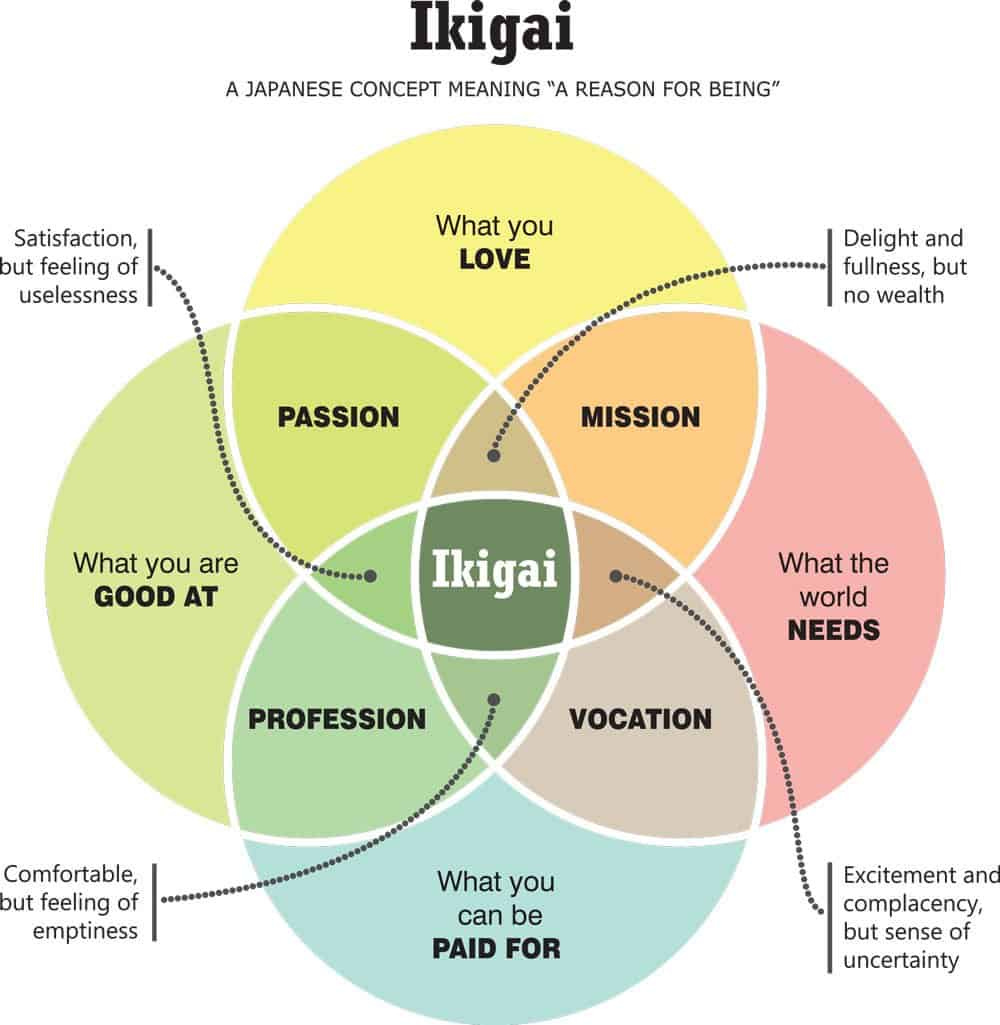
Dig a layer deeper and we can apply one of the better mental models for building this highly individualized sense of self-positioning: ikigai.
Ikigai translates to “live” (iki) “with value” (gai). Rooted in Japanese philosophy, it’s about building purpose through discovering the big 4:
What energizes you
What skills you’re praised for
What society needs from you
What sustains you
You blaze the trail to discover what it is you set foot on this Earth to do. You will never find yourself. You will never escape yourself. You will only set out on the path your true purpose. And that true purpose is the lifeblood for vitality — the real longevity pill.
At the root of every man’s purpose sits two things: to love & to build. That’s it — but how to love & how to build is entirely up to you. That’s the beauty of the journey. And what a sin it is to not enjoy the journey.
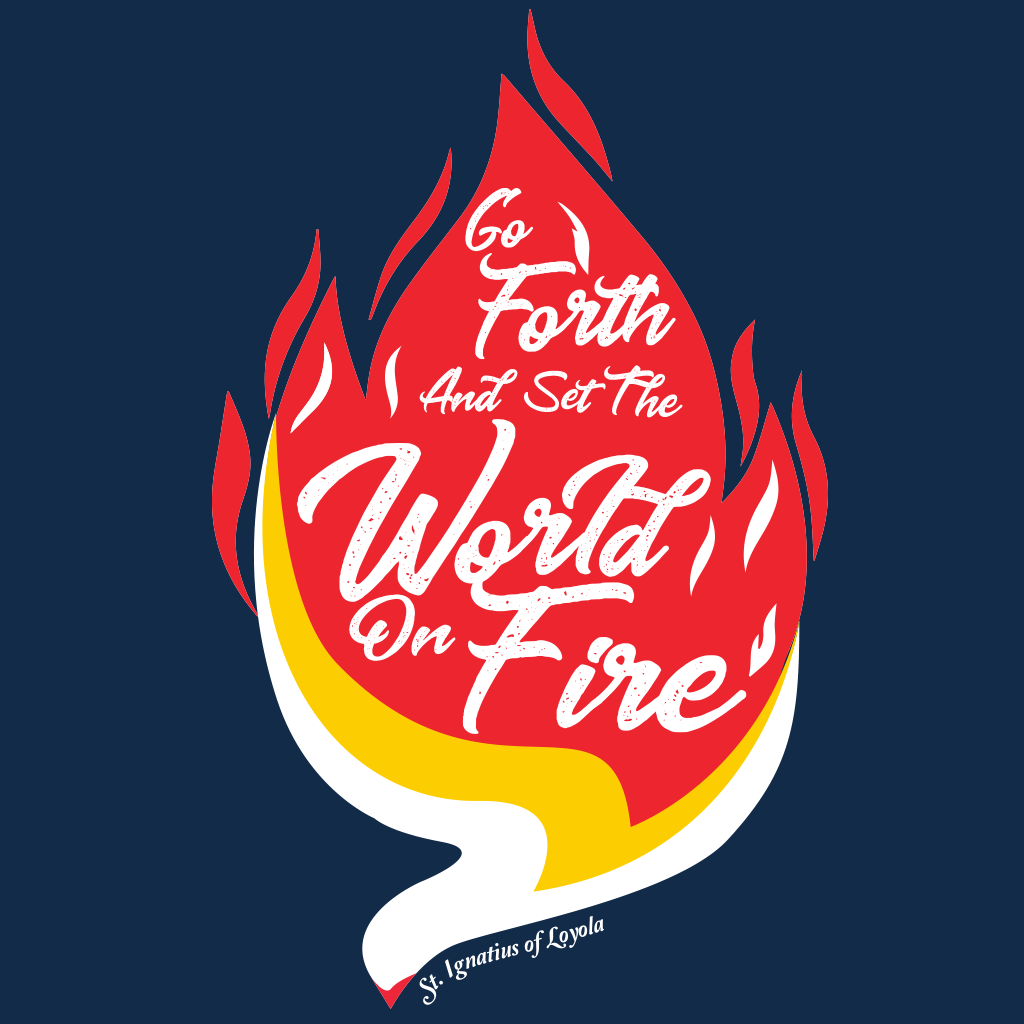
Now, it’s only fair to remind you of the words of St. Ignatius Loyola: “Ite inflammate omnia" (“Go forth, and Set the World on Fire”).

Your friend,
Phys
Hill PL, Turiano NA. Purpose in life as a predictor of mortality across adulthood. Psychol Sci. 2014 Jul;25(7):1482-6. doi: 10.1177/0956797614531799. Epub 2014 May 8. PMID: 24815612; PMCID: PMC4224996.
Levy BR, Slade MD, Kunkel SR, Kasl SV. Longevity increased by positive self-perceptions of aging. J Pers Soc Psychol. 2002 Aug;83(2):261-70. doi: 10.1037//0022-3514.83.2.261. PMID: 12150226.
Lee LO, James P, Zevon ES, Kim ES, Trudel-Fitzgerald C, Spiro A 3rd, Grodstein F, Kubzansky LD. Optimism is associated with exceptional longevity in 2 epidemiologic cohorts of men and women. Proc Natl Acad Sci U S A. 2019 Sep 10;116(37):18357-18362. doi: 10.1073/pnas.1900712116. Epub 2019 Aug 26. PMID: 31451635; PMCID: PMC6744861.
Pänkäläinen MT, Kerola TV, Hintikka JJ. Pessimism and the risk for coronary heart disease among middle-aged and older Finnish men and women: a ten-year follow-up study. BMC Cardiovasc Disord. 2015 Oct 2;15:113. doi: 10.1186/s12872-015-0097-y. PMID: 26432506; PMCID: PMC4592564.
The part about Hal feeling his mission was complete really struck me. There's definitely something in that idea of purpose keeping us going, regardless of the unvierse's reasons.
Thank you. I needed this.
Now, make a difference for some other & me.