



A younger dude recently came to me. Trouble falling asleep. Trouble staying asleep. Waking up around 2–3 AM every morning. After walking through his foundations: diet, bloods, gut function, daily routine including light environment, digital diet, movement, social habits and any acute/chronic stressors. Everything dialed in.
Having dealt with the same issue myself, I asked: “Do you wear a sleep tracker?”
“Yep.”
I told him to take it off for a month.
Three weeks later: “I’ve felt more refreshed this past week than I have in over 2 years.”
Turns out the research community already had a formal term for it: orthosomnia, where sleep tracker obsession itself disrupts sleep architecture increasing pre-sleep anxiety.

He’s not alone. People buy the Whoop or OURA to sleep better only to sleep worse because the device said so. The cycle repeats.
“So be ignorant…?”
Nope — it’s about learning to read the biologically built-in signals your body already provides.
Here are 12 proxies that replace performative tech with something more reliable: your own awareness.
I. The Morning Read (what your body tells you before you do anything)
#1: Sleep Quality → Morning Focus + Tolerance
Replaces: Oura/WHOOP/Apple Watch sleep scores
Can you sustain focus without a headache/brain fog for 30+ minutes upon waking? Does the guy chomping on his bagel with cream cheese in your ear not bother you (as much)? If yes to both, your glymphatic system cleared metabolic waste (beta-amyloid, tau proteins) overnight, cortisol awakening response rose on schedule, and excitatory glutamate isn’t lingering from incomplete NREM cycling. Some of the markers of restorative sleep.
#2: Caffeine Tolerance → Coffee Response Gauge
Replaces: Cortisol timing apps, adenosine receptor speculation
Do 2–3 cups of coffee feel like jet fuel? If they barely register or make you anxious, you’ve either: 1) saturated adenosine receptor tolerance or 2) your autonomic nervous system scale is habitually tipped towards the sympathetic side without enough parasympathetic tone.
#3: HRV / Autonomic Balance → Morning Wood / Bean
Replaces: HRV wearables
The single best free proxy for vascular and nervous system health that exists. We speak about this one at length here:

II: The Calibration Check (are your neurochemical signals functioning correctly?)
#4: Dopamine Sensitivity → Music Response
Replaces: Dopamine detox protocols
When you turn on a banger, does it hit like a mild drug?

Let this serve as an honest marker of intact mesolimbic reward signaling. If music feels flat, your D2 (dopamine) receptor density is downregulated & prolactin likely elevated from chronic overstimulation/digital anhedonic state of excess social media, stims, & gooning. The fix lies in deleting the low-cost dopamine vectors & activating the dopaminergic system via valuable accomplishment.
#5: Hormone Balance → Reply Guy Test
Replaces: Frequent testosterone/estrogen panels
If a reply guy on social media sends you into a tailspin, he’s entered into your OODA loop successfully (only you have the keys). There’s a good chance your androgen levels are outpacing estradiol’s modulatory role (generally a T/E2 or DHT/T imbalance). Or your inhibitory GABA tone is paired with an excess glutamate buildup. The combination of hormones and neurochemistry represents a nice proxy for fuse length.
Note: Biannual bloodwork remains a non-negotiable.
#6: Stress Resilience → Breath & RHR Awareness
Replaces: HRV-guided breathwork apps, stress scores
Can you bring a racing heart & spiraling thoughts under control with 5 slow, deep breaths? A direct test of vagal efferent tone and your capacity to upregulate parasympathetic output via the baroreflex.
III: The Functional Layer (what your body reveals through function)
#7: Body Composition → Mirror
Replaces: InBody, DEXA scans
Use a mirror & pair it with:
Visual references
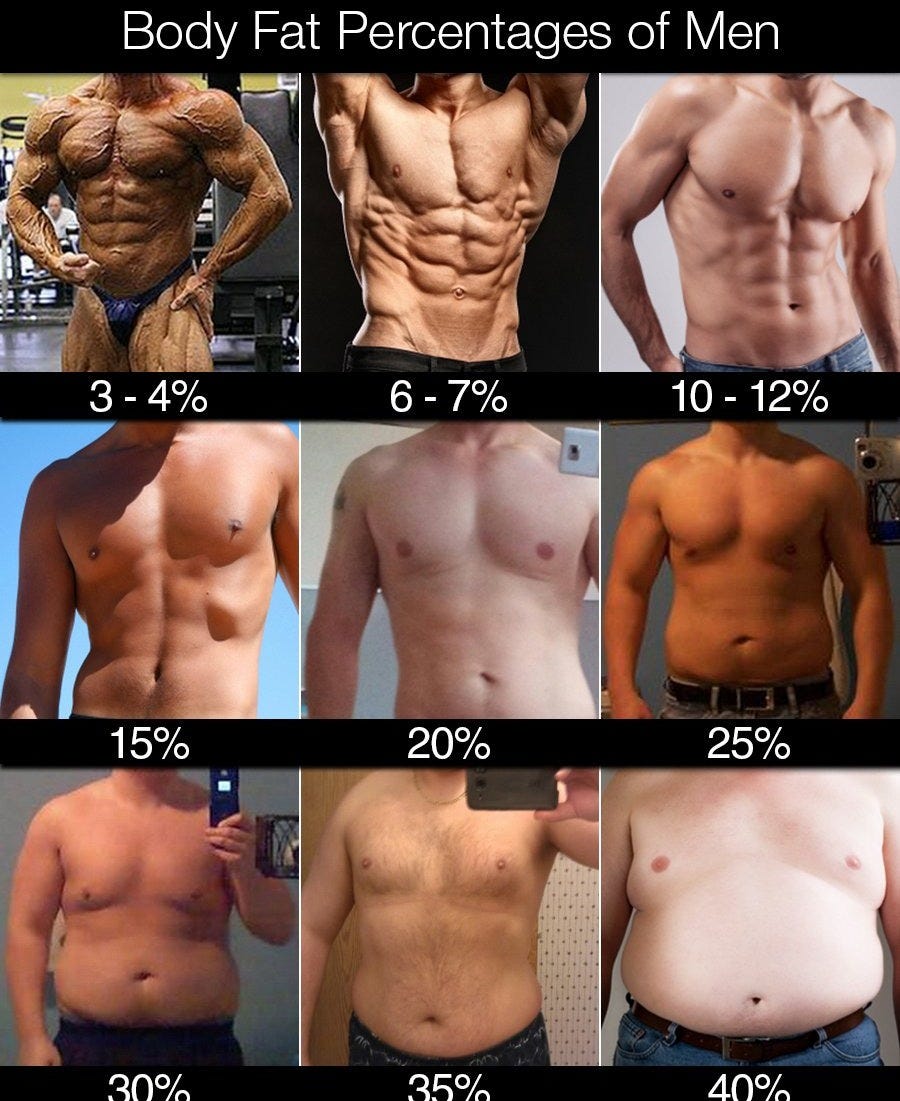
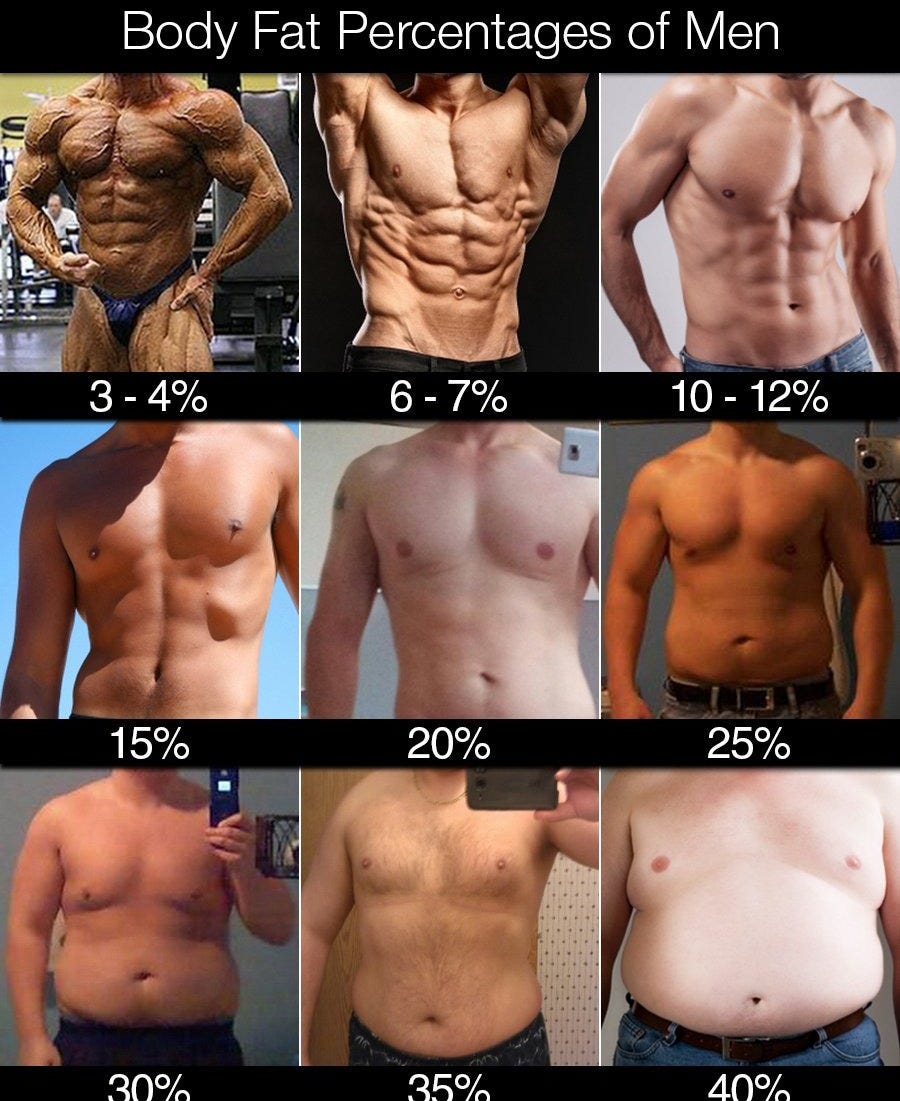
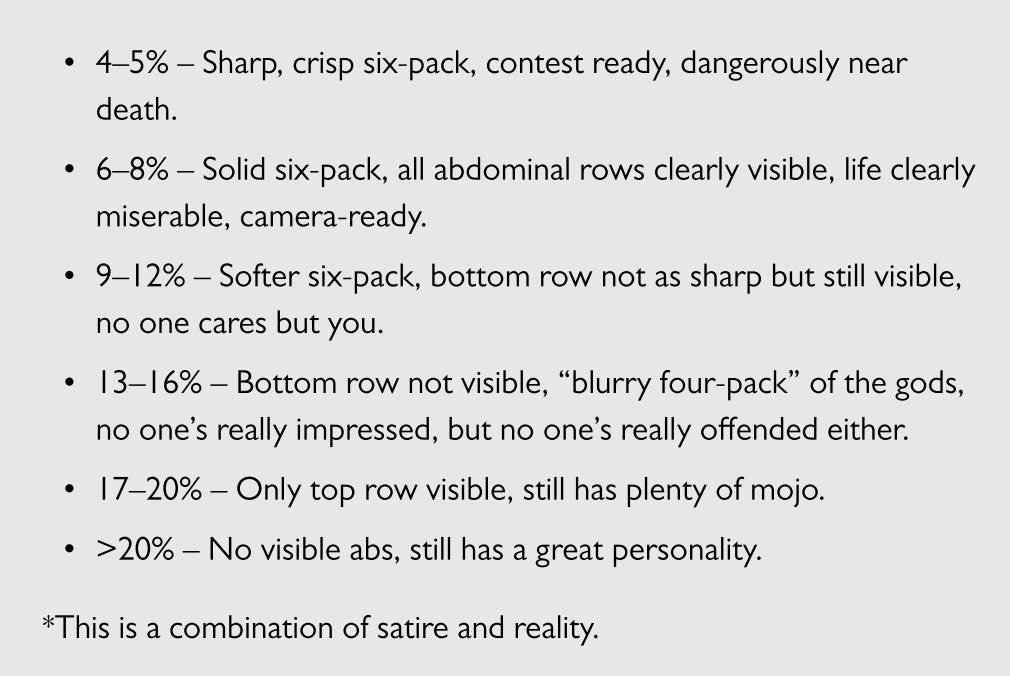
Male BF visual approximations (Source) Body fat estimation descriptions
I still recommend getting a baseline DEXA scan as early as possible, then every few years afterwards to monitor bone mineral density & visceral adipose tissue as you age. An example of what a typical read out provides below.


#8: Gut Health → Daily Poops
Replaces: GI-MAP, Viome, microbiome sequencing kits
Do you have a daily, well-formed bowel movement? Bonus points if around the same time of day. Daily poops are an easy proxy for a favorable gut microbial profile & fortified gut barrier integrity.
Added bonus: can you trust a fart?
#9: Energy / Metabolic Health → Post-Meal Vitality Check
Replaces: Continuous glucose monitors
Sustained energy post-meal reflects efficient glucose uptake & an adequate insulin/leptin response. Conversely, postprandial crashes point to insulin resistance, poor metabolic flexibility, or mitochondrial inefficiency.
#10: Immune Function → Acute Stress Recovery
Replaces: Inflammatory marker panels (i.e. CRP), immune “scores”
How fast do you bounce back from a hard training session, a bad restaurant meal, or a stressful stretch? If a minor stressor knocks you out for 2–3 days, you may have an elevated low-grade inflammation baseline, slow resolution of acute inflammation, or nutrient insufficiency limiting immune cell turnover. Resilience is the metric.
IV: The Cognitive Output Layer (what your biology produced in terms of cognition & action)
#11: Screen Time → Daily Value Audit
Replaces: Screen time reports
Screen time has evolved into a virtually useless metric. We all live in the digital world and will continue to. At the end of the day, one thing matters: “What of value did I accomplish today?” You can create any daily value audit that works best for you, but one I like is conducting an analog (pen + notebook) version of the Daily Examen. This forces you to confront what you delivered to your future self, your family, & society.
Simple: Be still → Be grateful → Be reflective of what you got done today → Be authentic of what you fell short on → Be deliberate in what lies ahead tomorrow
#12: Cognitive Health → Memory Recall Speed
Replaces: Brain training apps, cognitive assessment tools
The inability to recall specific details from yesterday’s conversations suggests impaired hippocampal consolidation, which is often downstream of disrupted deep sleep, neuroinflammation, or inadequate acetylcholine precursor availability (choline + tyrosine + taurine + B-vitamins + DHA).
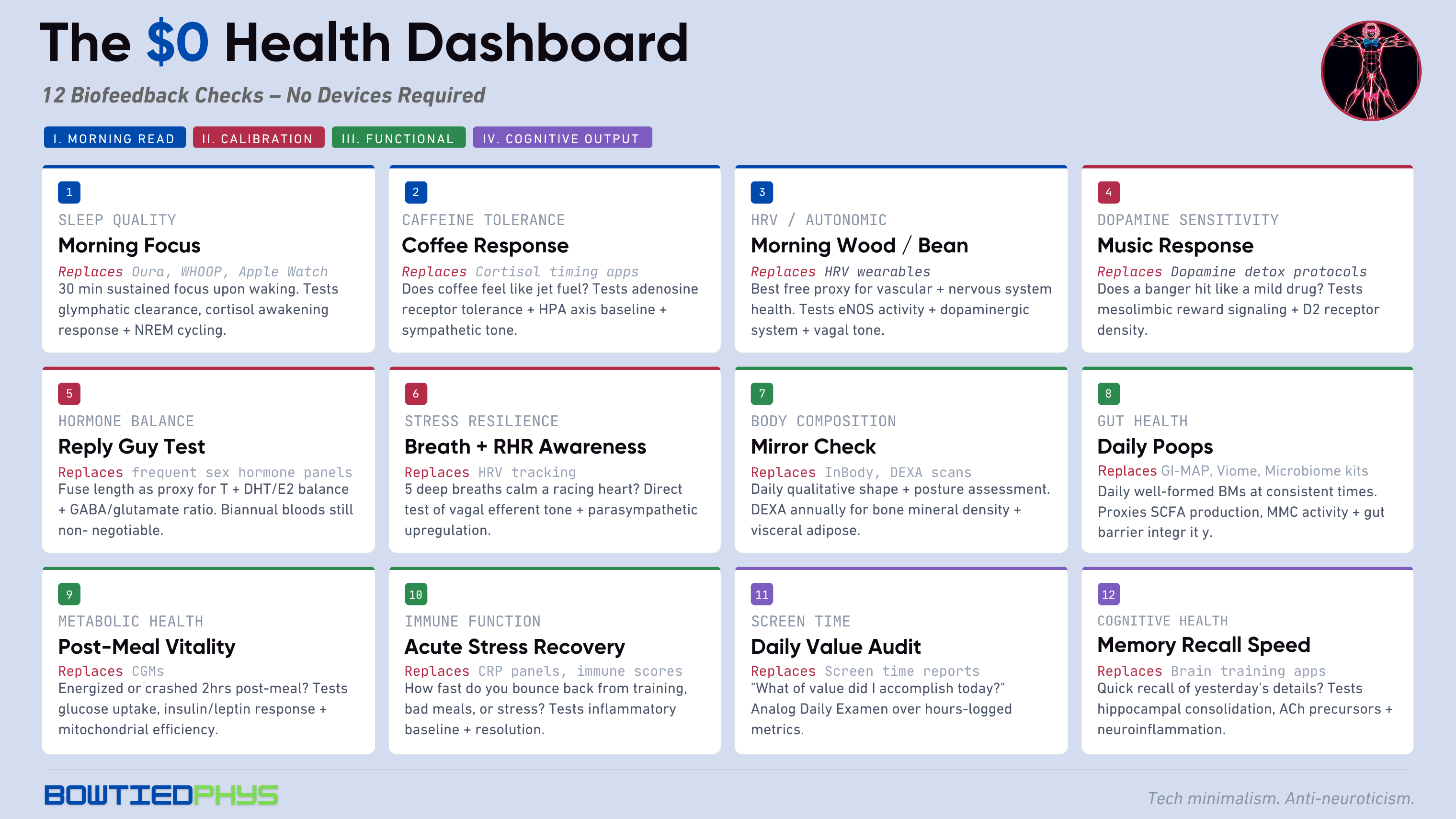
Final Word: Don’t Be Neurotic
The health space is dominated by a principle of being overquantified by the underqualified. Because of the over-quantification trend, we’ve quietly become addicted to the data and it’s come at a steep cost/
What were once useful tools are now symbols of performative self-improvement. The stress of optimization ironically created the very dysfunction most are trying to prevent. And often too afraid to openly admit.
The irony would be turning these proxies into a rigid checklist you obsess over.
The real goal here is building bioindividual interoception: the ability to perceive and accurately interpret your body’s internal signals. Higher interoceptive awareness consistently correlates with better emotional regulation, improved decision-making, & stronger health outcomes across time & space.
Your body gives off useful data and the best health tool you own is the skill of being able to listen to it. (free by the way)
Your friend,
Phys
Really liked it. Thanks!
You can only measure so much in a person within a small piece of hardware. We either have to become bulky cyborgs or we can just listen to our bodies.