


Even the self-declared world’s healthiest man runs into the issue of waking to pee at night.

More than a third of adults over 301 wake up to urinate at night. The condition is so common we've normalized it, but it’s still far from even normal function.
The standard advice is something like: Stop drinking water after 6 PM. Cut sodium. Front-load hydration.
You try them. They help marginally. But you're still waking up.
Because surface-level interventions never address upstream causes.
Nighttime peeing signals deeper issues.
If you’re waking even 1x to pee, there’s a high chance at least one factor outlined here is driving it.
Here’s the guide to help you stop peeing tonight.
Cause #1: Circadian Dysregulation
Your brain-kidney-bladder axis operates on a 24-hour clock. At night, circadian signals should increase arousal thresholds, melatonin, & vasopressin reducing urine production and maintaining bladder capacity. However, blunted rhythms result in higher nighttime urine production.2
Duffy et al. (2016)3 tracked urine production over 40 hours in young versus older adults. Total 24-hour output was identical, but older adults produced significantly more urine during nighttime hours.
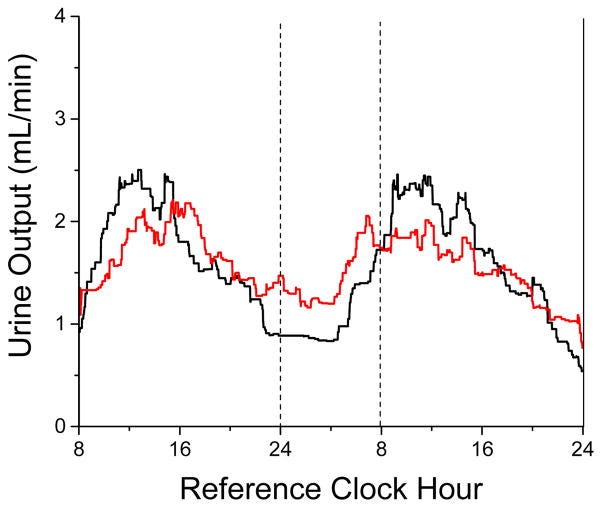
They explained:
“…this reduction in amplitude of the circadian rhythm of urine output with aging contributes to nocturia in otherwise healthy older adults by causing more urine to be produced during the nighttime hours than in young adults.”
Solutions
Minimize blue/white light post-sunset: red/amber bulbs, f.lux/Night Mode, blue blockers
Suppress nnEMF before bed (WiFi off, airplane mode)
Maximize natural light exposure at sunrise, midday, & sunset
Complete darkness: blackout curtains & eye mask
Consistent meal timing to synchronize gut microbiota circadian cycles
Epitalon (3-6mg before bed) → circadian amino acid complex to reset pineal gland function
Cause #2: Nervous System Dysregulation
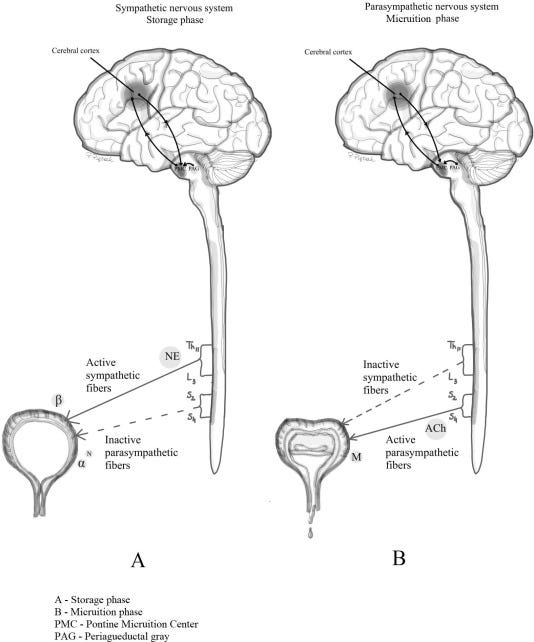
Sympathetic hyperactivity and poor vagal tone create an overactive bladder. The imbalance increases bladder sensitivity and triggers urgency signals even when bladder volume is low.
Solutions
Track HRV, resting heart rate, & blood pressure (relative metrics…it’s today you v. last week you)
Analog brain dump before bed
Cut social media 2 hours pre-sleep
4-7-8 breathing to activate parasympathetic response
Magnesium (Tauromag or glycinate) + L-theanine + glycine
Combine all three with the PreSleep formula (Save 10% w/ PHYS10)
Herbal teas: chamomile, mulungu, magnolia bark
Sauna + cardio 2-3x weekly
Cause #3: Cold Temperatures
Every 1°C drop in bedroom temperature raises nighttime peeing odds by 7-10%.4
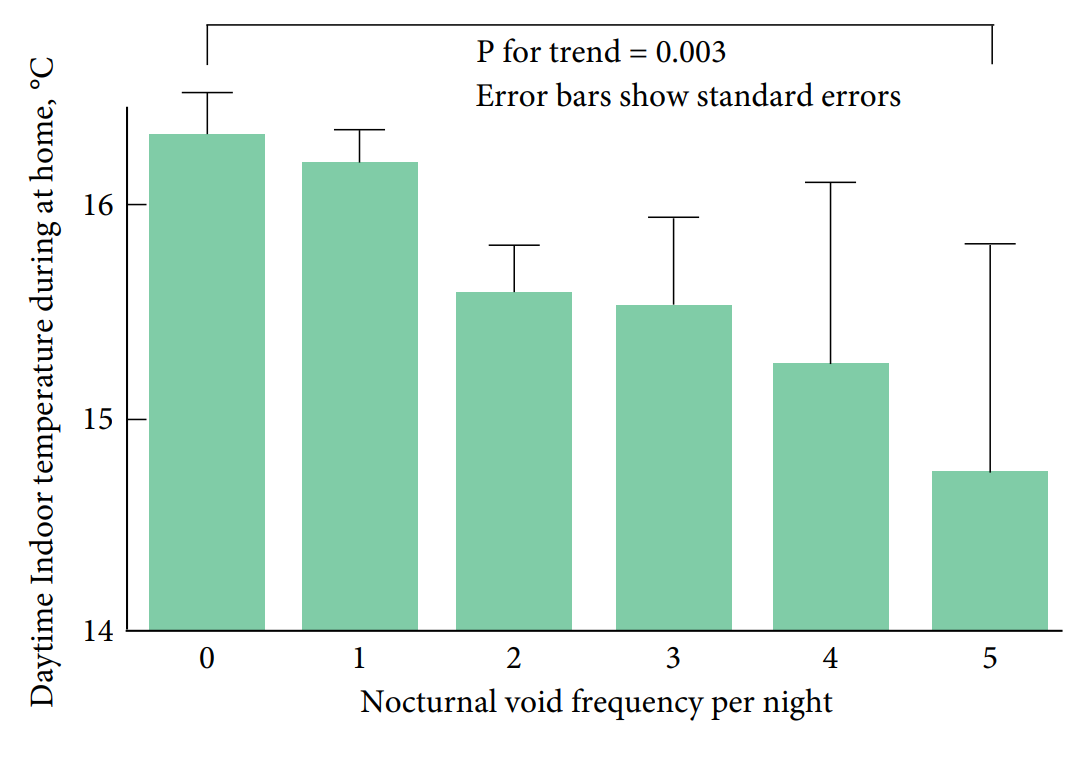
Temperatures below 60°F activate TRPM8 cold-sensing channels, heightening bladder excitability. Winter exacerbates this through greater indoor-outdoor temperature differentials.
