
Nicotine Exit Protocol
A neuroscience-backed system for dismantling nicotine dependence & creating the nicotine mimetic stack
You’ve been psy-op’d into believing you can spam Zyns without biological consequence. But wanting to quit and building the proper exit are two different things.
Raw dogging it isn’t sustainable. And if it’s your preferred path – expect max pain.
“In the long-run (and often in the short-run), your willpower will never beat your environment. The more disciplined your environment is, the less disciplined you need to be. Don’t swim upstream.”
James Clear
Fortunately it’s never been easier to take the offramp from your nicotine habit. (Ask how I know…)
After 10 months of testing, here’s what we’ve delivered:
Why Quit
Cold Turkey or Taper?
Pre-Quit Setup
Withdrawal Map
First 72 Hours
Tactical Toolkit
Nicotine Mimetic Stack
Why Quit
“I think I’ve been in the top 5% of my age cohort almost all my adult life in understanding the power of incentives, and yet I’ve always underestimated that power.”
Charlie Munger
We can easily put together an entire article dedicated to the detrimental impacts, but here’s the abridged version of what chronic nicotine usage inflicts on your long-term health:
Worsens gut microbiota composition, motility & function
“Phys — spare me your nerd literature. Does this affect anyone in the real world?”
Checking in on Med Gold.
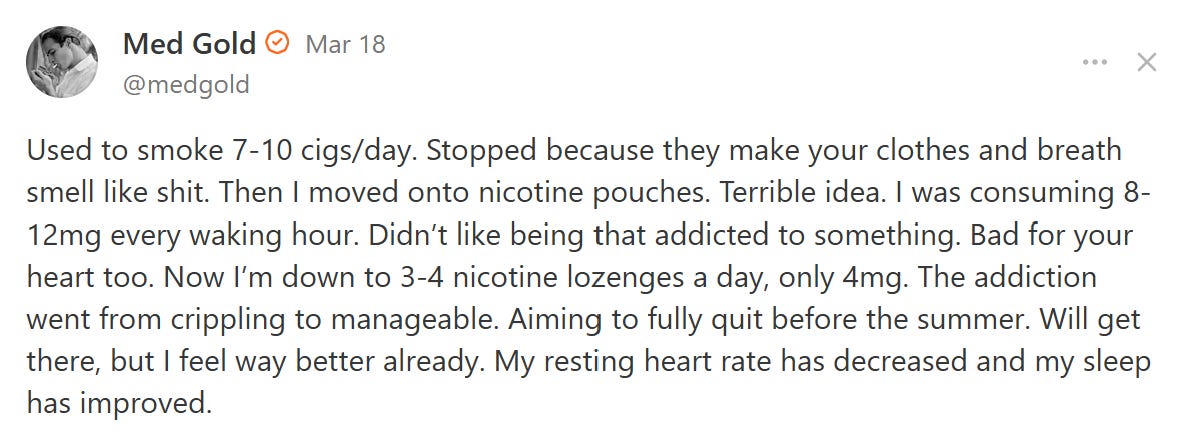
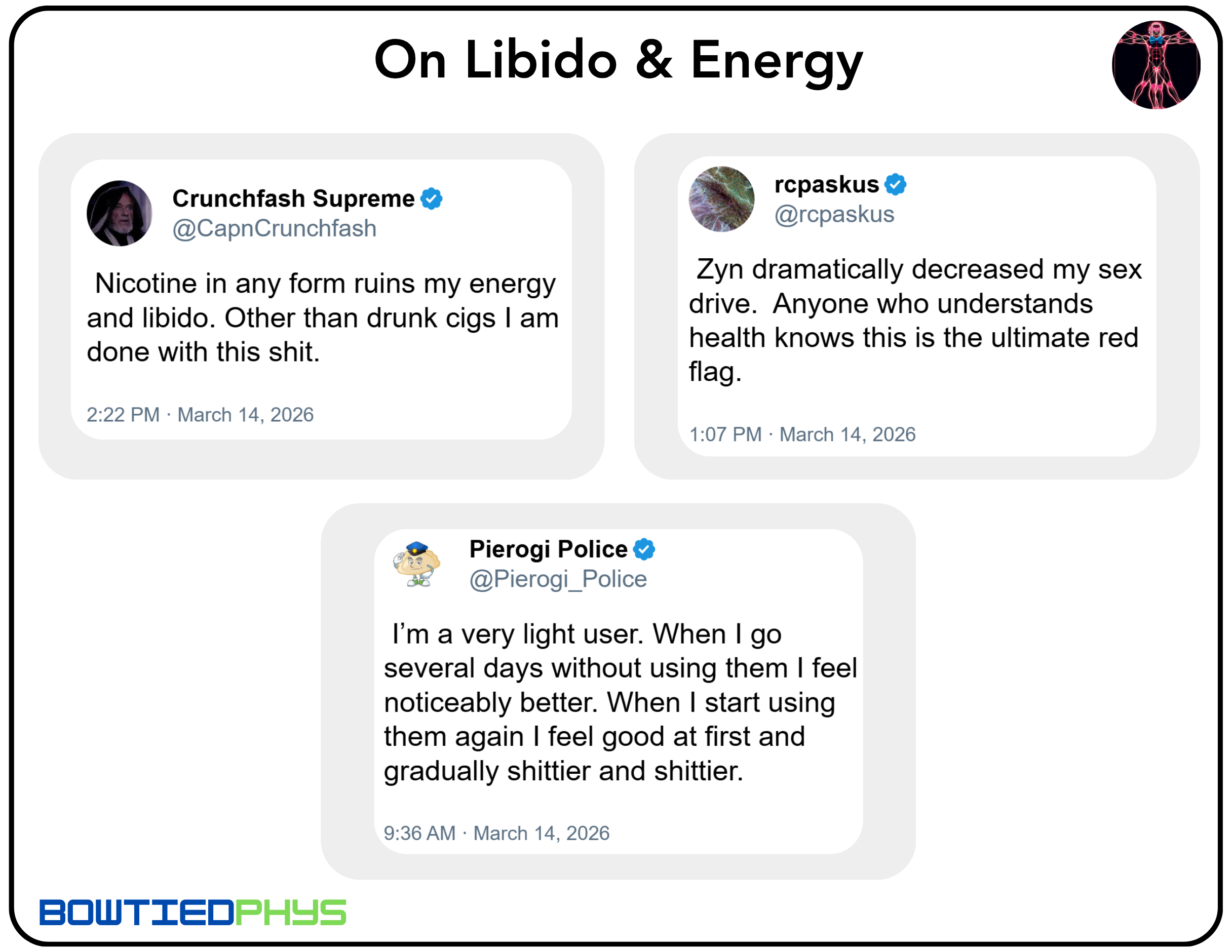
When I posted about there being no biological free lunch with Zyns. We got a lot of anecdotal feedback. Some of the first effects are felt on the drawdown in energy levels…& sexual vitality.
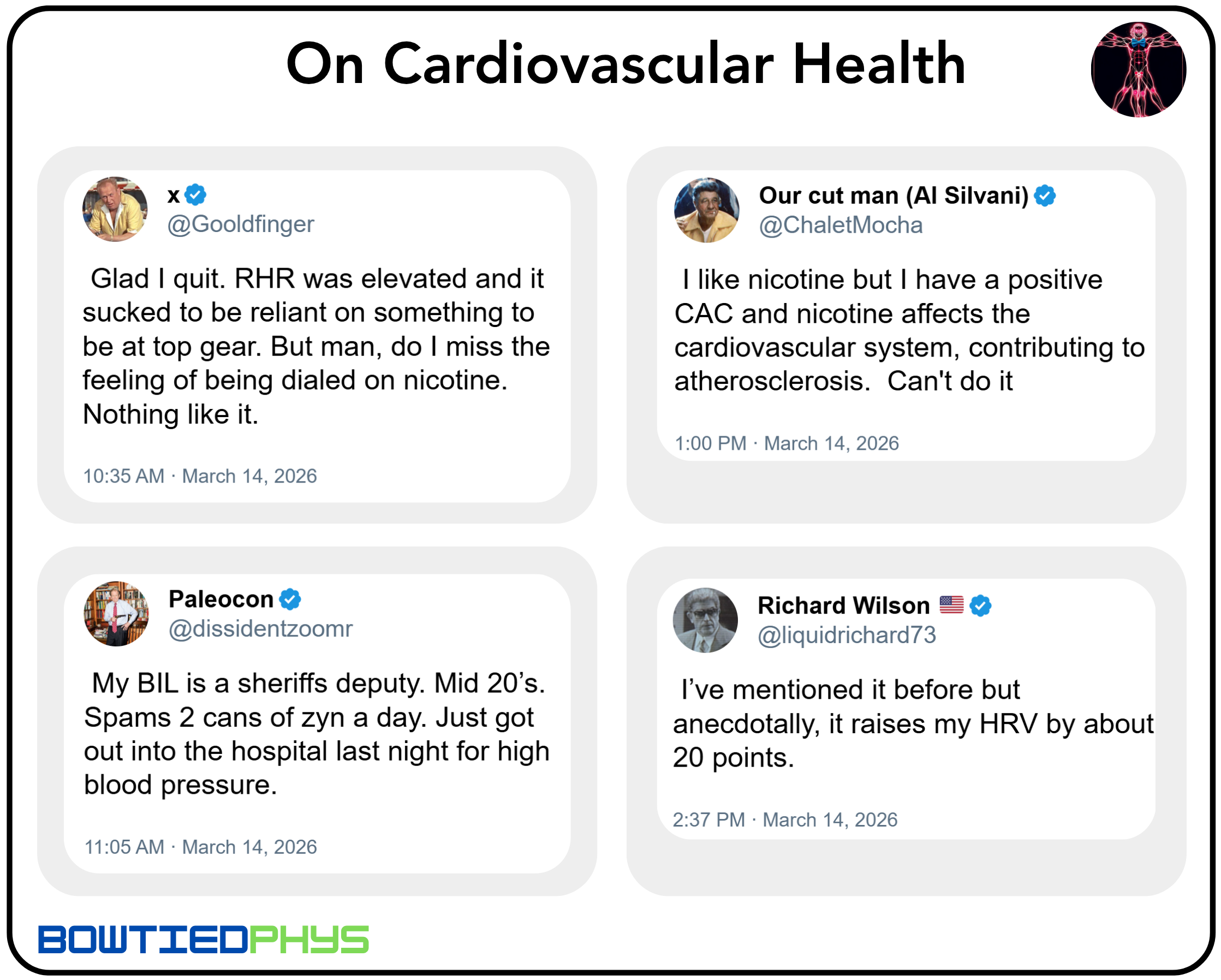
The most noticeable impacts though are felt on the cardiovascular front.
Gut function is not left untouched either.
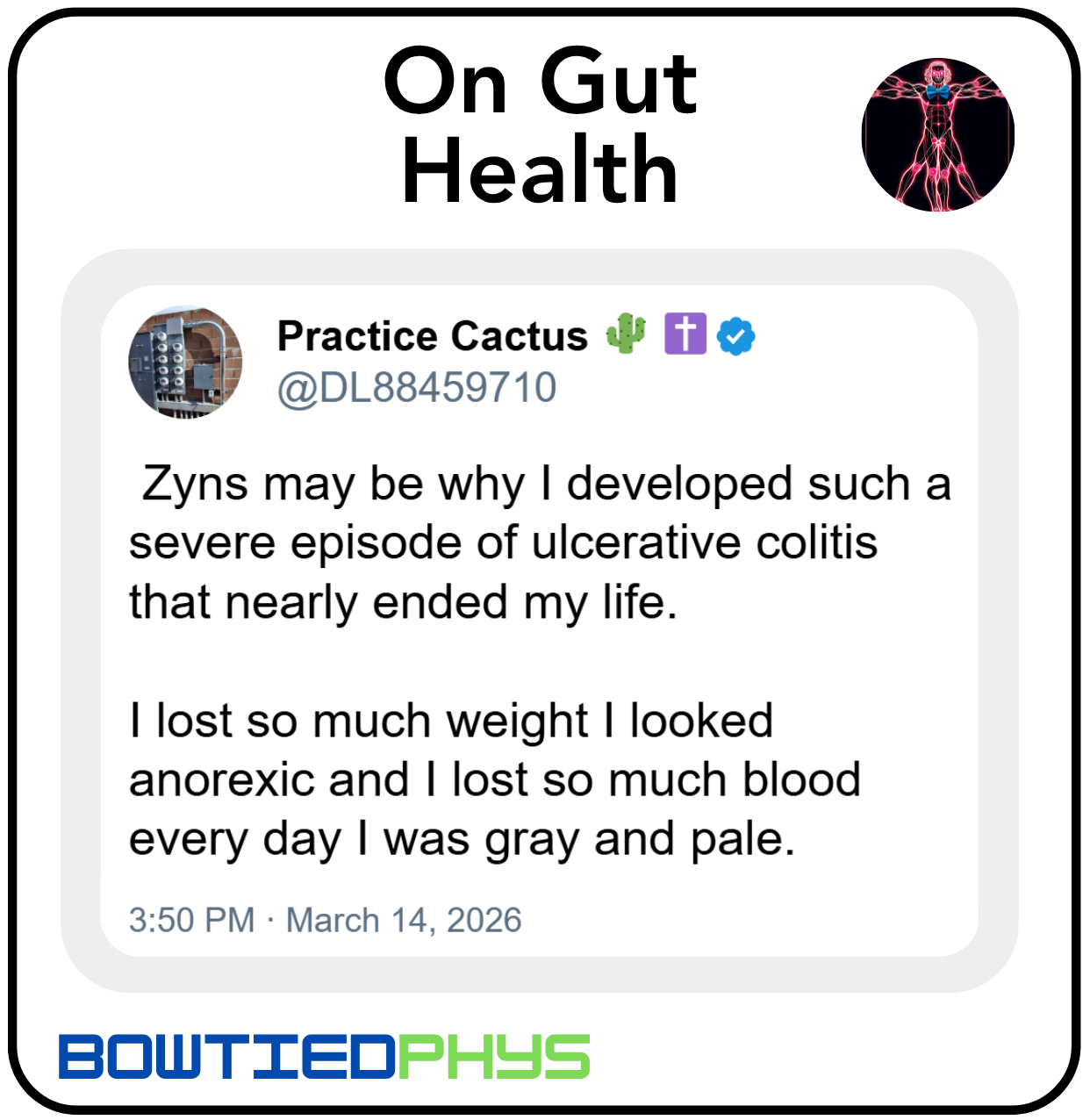
And finally to why exactly we’ve cooked up this guide over the last year.
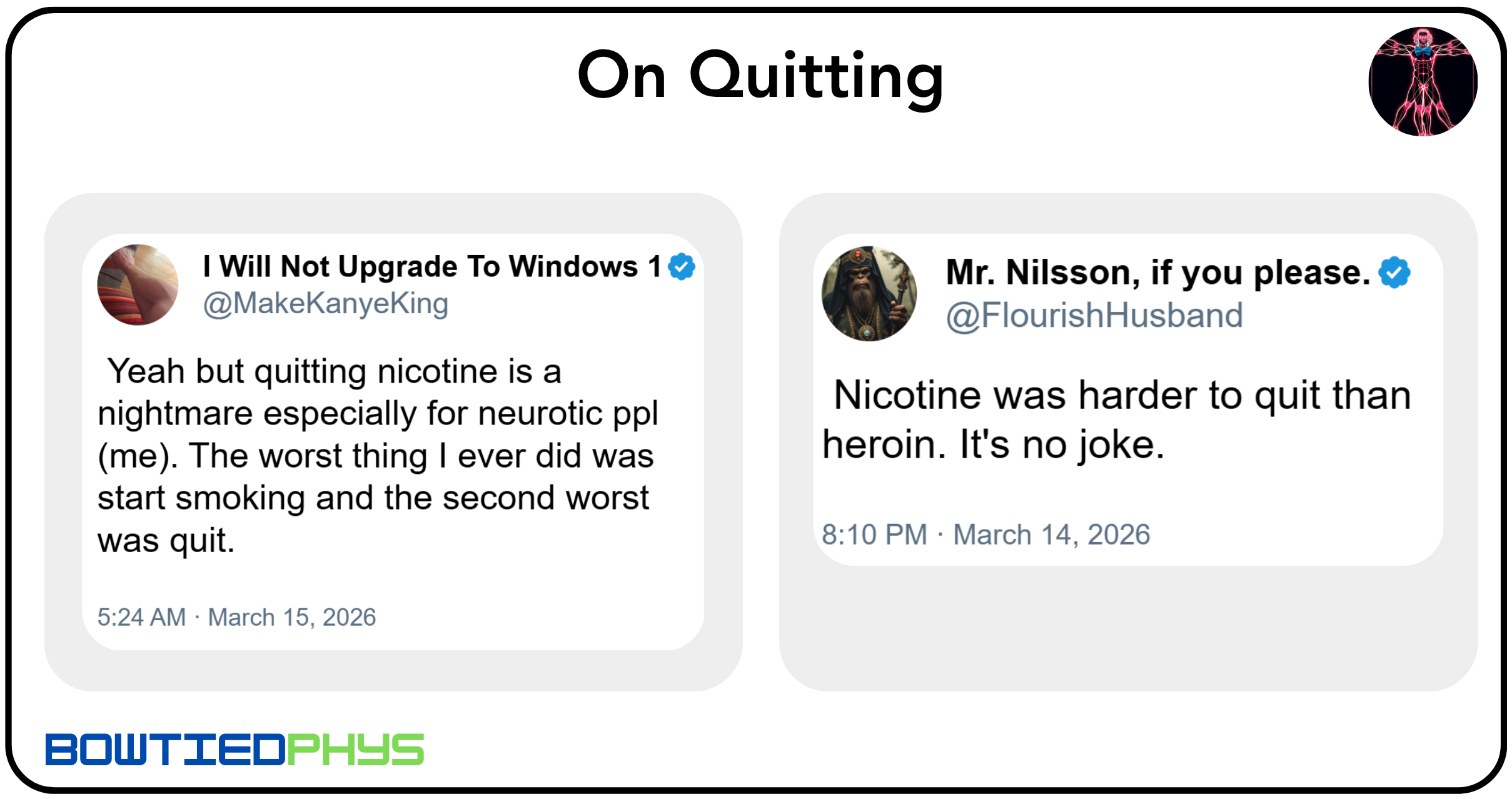
Cold Turkey or Taper?
Bioindividuality remains king and you know yourself best. That means the right method depends on:
How dependent you are
What your life looks like over the next two weeks (highest friction period)
What you’ve already tried (& failed with before)
I’ve found the below factors as a good set of proxies to choose the right path. You won’t fall cleanly into one bucket, but 5+ in a single column gives you an idea where to start.
Lean Cold Turkey If:
≤6mg pouches, fewer than 6 per day
<2 years of consistent use
0–1 prior quit attempts
Moderate withdrawal in past attempts (no big changes in cardiorespiratory measures – increased RHR or decreased HRV)
Stable circadian regulation & sleep baseline (7+ hours nightly)
Manageable current life stress
Minimal alcohol use (<3 drinks/week)
Schedule flexibility for the first 7 days
No anxiety or low libido symptoms during prior quits
Low cheap-dopamine load (limited degen tendencies = infinite scrolling + gaming + gambling)
Lean Structured Taper If:
8mg+ pouches or 8+/day (looking at you 28mg NYXX users)
2+ years of consistent use
2+ prior failed quit attempts
Severe past withdrawal (elevated anxiety, poor sleep for >3 nights)
Circadian dysregulated (i.e. not going to bed before 10 PM & waking up ~sunrise) & sleep already disrupted (<6 hours nightly)
High allostatic stress load (work + relationship + finances)
4+ drinks/week or daily alcohol
High susceptibility to caving (i.e. work, family obligations) in the next 10 days
Anxiety or low libido during past quits
Heavy cheap-dopamine consumption (high degen tendencies = infinite scrolling + gaming + gambling)
Taper Protocol
If you’re tapering, you obviously need to build in more time. Set a hard quit date & follow a simple, deliberate schedule. Don’t try to speedrun a protocol.
Week 1: Drop strength (6mg → 3mg) at full frequency
Week 2: Hold strength & cut pouches by 25%
Week 3: Cut pouches by another 25%
Week 4: Down to 2 pouches/day, then zero by end of week
Quit date: Day 28.
Dopamine Audit (A Pre-req Before You Begin)
If there’s one area you need an honest audit of in advance of either protocol (and the one that one-shots most), it’s the dopamine baseline.
“The first principle is that you must not fool yourself, and you are the easiest person to fool.”
Richard Feynman
An anhedonic baseline is playing this on expert mode. A nicotine-saturated brain is a desensitized dopaminergic system. The absolute last condition you want to enter in with is a set of cheap, high-density dopamine sources normalizing an unnaturally high baseline.
Use these to assess if you’re ready to implement the protocol (yes = red flag):
Phone Reflex → Do you reach for your phone the moment you face uncertainty or silent boredom?
Sustained Attention → Does reading uninterrupted for 30 minutes feel like intense effort?
Social Media Fast Tolerance → Does a 24-hour social media fast feel difficult?
Audio Absent Movement → When you walk, do you need some form of audio on (i.e. podcast, music, or audiobook)?
Microvictory Threshold → Does completing a normal baseline task like meal prepping or finishing a workout fail to register as the least bit satisfying?
Morning Ritual → Is the first conscious act of your day reaching for your phone?
Solo Meal Capacity → Do you need a screen to eat a meal alone?
Stimulation Stacking → Do you regularly run two inputs at once (i.e. scroll with music)?
Silence Tolerance → Can you drive 20 minutes without sound?
Tab Hoarding → Are there 15+ tabs open on your phone or browser right now? Multiple feeds in active rotation?
Delayed Gratification → When was the last time you completed a 90-minute focused task without breaking for a hit of stimulation? If you can’t remember…
UV Walk → Does a walk in exceptional (high UV) weather feel flat?
A 7–10 day sensitization period before Day 1 is enough. Deprive to sensitize.
Pre-Quit Setup
Your system is your environment. Your environment determines the outcome.
“Every system is perfectly designed to get the results it gets.”
Donald Berwick
Remember the Rule of 3
✅ 3 minutes to suppress the cravings
✅ 3 days to push past the withdrawals
✅ 3 weeks to form the new nic-free habit
✅ 3 months to rewire your brain chemistry
Pick the Right Launch Window
Quit into a busy weekend in a new environment. Attempting at home or office has every Pavlovian trigger working against your favor.
The ideal launch window is 3–4 days of social interactions, new experiences, & limited access to your autopilot’d routine. Whatever it takes to eliminate the habitual grab. A trip with your wife/girlfriend & kids. A bachelor party/wedding weekend. A long weekend traveling to friends or family.
You get the point. Remove yourself from your standard environments. And if you can’t do so over the entirety of the period, cycle in a new “third place” for a few days.
Clean the Environment
As important as the environment is with fat loss, it is equally important with your nicotine exit. Max the friction to the bad by eliminating every pouch from your possession. Your house. Your car. Your gym bag. Your desk.
An easy environmental lever as each can represents an opportunity to negotiate with yourself…and you don’t want to present yourself with that opportunity.
Stock Your Bored Mouth Substitutes
Into the later weeks, the nicotine pull becomes less neurochemical & more habit-based (i.e. reaching for the pouch out of habit/addressing boredom or uncertainty). We’ll discuss way more tactical tools below, but so much of the game up front is curing “bored mouth”.
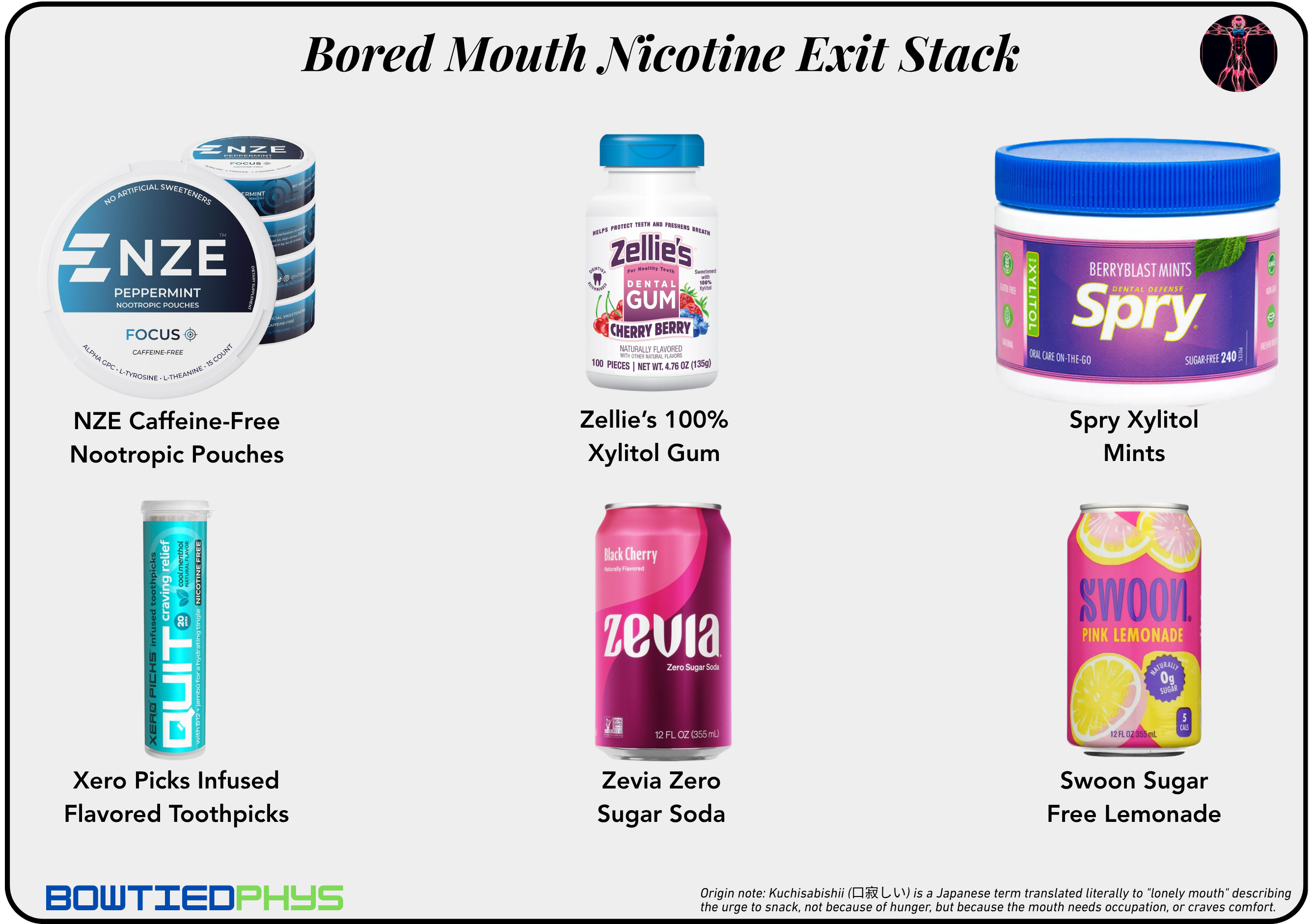
✅ NZE Caffeine-Free Nootropic Pouches
Withdrawal Map
Spamming nicotine creates excess β2*-nicotinic acetylcholine receptors. Too much activation means desensitizing them. So when you stop, the excess receptors reactivate with no nicotine to occupy them. PET imaging confirms this upregulation takes 6—12 weeks to normalize.

First 72 Hours
Since this is the toughest stretch, we’ll give some special attention to what that looks like from a withdrawal perspective.
Hours 1–6: Mild Discomfort
If you’ve gone six hours without nicotine in the last year, this won’t be an issue.
**Special note on caffeine heading into Day 1: Nicotine halves caffeine’s half-life causing caffeine to stay in the blood twice as long. When you quit the Zyns, your normal coffee response will hit much harder.
Swanson et al. (1997) measured saliva caffeine in quitting smokers maintaining baseline intake: 162% of baseline by Day 2 → 174% by Day 7 → 203% by Week 3 (focus on the sharp rise in the black dots post-quit).
The opposite extreme is worse. In the same study completely ditching caffeine triggered significant fatigue (Days 1–4), increased headaches, & lower stimulation.
Recommendation: cut caffeine intake by ~25-50% for the first 10–14 days, then titrate back up as needed.
Hours 6–24: Peak Physical Withdrawal Kicks In
Expect headaches, irritability, some restlessness – the nervous system recalibration package. At the same time, don’t nocebo yourself into these.
Employ the tactical tools listed below.
Hours 24–72: The Down Bad Valley
By far the toughest window. Sleep worsens. Dreams can get bizarre (normal and will pass). Energy will likely feel depleted. Hunger spikes increase.
Focus on nutrient-dense meals (& snacks) here. Appetite suppression from nicotine lifts in withdrawal. Rather than fighting cravings in week 1, lean into it & pick the optimal carb sources. My personal favorite: fruit + dark chocolate + raw, local honey as toppings on Greek yogurt.
Once you make it past Day 3, the worst of the acute physical phase is behind you.
Tactical Toolkit
Each of these tools serves 1 or more purpose:
➜ Balance autonomic nervous system regulation
➜ Replenish nutrients depleted via nicotine usage
➜ Improve redox balance
➜ Alleviate cravings
Also tiered according to efficacy:
S-Tier = Absolute must
A-Tier = Excellent, passing on it is playing on expert
B-Tier = Nice to have, but not a necessity
Movement
HIIT Cardio (S-Tier)
The endocannabinoid & endorphin boosts are unparalleled by any other tool on the list. Here’s my favorite (& most effective aerobic capacity increasing) 12-week high-intensity cardiorespiratory progression:
> Set treadmill incline to 1.5% grade
> Walk 200 m (⅛ mi) @ 3.0 mph
> Increase speed to 7.0 mph
> Jog 200 m (⅛ mi) @ 7.0 mph
> Increase speed to your max run pace for a 400 m (¼ mi) sprint
> Return back to 3.0 mph
> Repeat 5 more times (for 6 total rounds of 400 m each interval)
Each week, progress by increasing your max run pace 0.1–0.2 mph.
Low-Impact, Low-Intensity Movement (S-Tier)
If you’re an office worker, set a timer for 90 min and move. Spread your movement throughout the day.
> Postprandial movement
> Morning light exposure
> Sunset walk
> On 90-min break periods
5 bouts of 2,000 steps beats 1 bolus of 10,000 steps. If you can’t move, keep a kettlebell at your desk (Goblet squats, halos, single-arm rows/shrugs).
Behavioral & Environmental
Human Contact (S-Tier)
Do not be chronically online. Of all the times to fade the human nutrient, this isn’t the one. A recent 2025 study showed social isolation significantly worsens withdrawal outcomes through dysregulated corticotropin-releasing factor (CRF) signaling.
Digital/Social Media Fasting (S-Tier)
Bathing in cheap dopamine sources and cultivating TikTok brain during withdrawal will only exacerbate the neurochemical imbalance tax. You’ll be craving dopamine hits, but just ensure your sourcing is valid (i.e. deep, fulfilling work).

Sunlight / UVB Exposure (S-Tier)
If there ever was a time to prioritize morning daylight within 30 minutes of waking… The cortisol-anchoring effect calibrates circadian rhythm when sleep is compromised. Later in the day, UV radiation triggers beta-endorphin and nitric oxide release in the skin and brain supporting mood & libido. Target 10–20 minutes of morning daylight + 20–30 minutes of midday sun (max skin exposure) daily.
Transdermal Magnesium Chloride Solution (A-Tier)
Nicotine accelerates magnesium loss. Withdrawal-induced stress also does. Magnesium spray applied to the back of the neck/forearms/thighs bypasses the gut for rapid absorption into skeletal muscle & the bloodstream. Reduces irritability/anxiety symptoms. Supports GABA/glutamate balance. Spray & massage before bed.
Here’s a great video on how to make your own low-cost standard spray solution version at home with distilled water, MgCl flakes, & a glass spray bottle.
How to Make Magnesium Oil from Flakes | Bumblebee Apothecary
Sauna (A-Tier)
The ultimate synergistic “supplement” to cardio. Sauna sessions trigger your brain’s endorphin system & activate protective heat shock proteins. 3 sessions per week @ 180°F+, 15–20 minutes per session. This helps to restore sympathetic-parasympathetic balance meaning better sleep, lower anxiety, less monkey brain, & reduced cravings.
Cold Shower (B-Tier)
Generally, we’d say this is an overhyped “longevity” intervention, but if there’s ever a scenario to implement this, it’s for this use case. Cold water (<55°F) increases plasma dopamine acutely by ~250% and norepinephrine by ~500%. During week 1, this addresses the core dopaminergic deficit. Even 30 sec helps. Cycled with sauna ideally.
Red/NIR Light (B-Tier)
Red & near-infrared light (600–1000 nm) passes through the skull and is absorbed by mitochondria. This restores ATP in the prefrontal cortex fixing the energy shortage that makes it hard to produce enough dopamine and serotonin, think clearly, or resist cravings during nicotine withdrawal. 10–20 minute sessions, 3–4x per week.
Functional Foods
You’re eating high quality foods anyways. You might as well choose from those that have functional benefits in alleviating the withdrawal symptoms.
Citrus (S-Tier)
Naringenin (the primary flavonoid in citrus) protects the brain during withdrawal by blocking the enzyme (MAO-A) that breaks down dopamine & serotonin too quickly. 2–3 servings daily in weeks 1–2 & 1–2 servings daily for the remainder of the normalization window.
Sources: Grapefruit, blood oranges, mandarins, clementines, tangerines, pomelos, Navel/Valencia oranges
Choline-Rich Animal Foods (S-Tier)
Dietary choline provides the precursor needed to produce more acetylcholine endogenously. During the 6–12 week normalization window, this reduces brain fog & irritability. Target 800–1,200mg daily.
Sources: Pasture-raised eggs (125 mg/egg), beef liver, grass-fed 90/10 beef, wild-caught salmon, fish roe, chicken breast
Probiotic-Rich/Fermented Foods (S-Tier)
The gut-brain axis is underappreciated in nicotine withdrawal. Lactobacillus & Bifidobacterium strains restore microbial diversity, enhance short-chain fatty acid production for gut barrier repair, & normalize vagus nerve signaling. All mechanisms connect gut serotonin status directly to mood, anxiety, & craving intensity. Target 1 serving with both lunch & dinner as a daily minimum.
Sources: Kefir (w/ chia soaked), kimchi (w/ retrograded rice), sauerkraut, Greek yogurt (w/ green banana), fermented beets/carrot/pickles, miso
Oily Fish (S-Tier)
Optimal source of EPA & DHA (Omega-3 fats). Nicotine depletes blood DHA levels. DHA improves dopamine & serotonin receptor signaling efficiency. EPA suppresses neuroinflammation. Prioritize high DHA density with balanced EPA intake. Aim for 2–3 wild-caught servings/week.
Sources: Sockeye salmon, sardines, mackerel, anchovies, herring, steelhead
Cocoa (A-Tier)
Theobromine in cocoa acts as a mild PDE inhibitor. Provides a sustained dopaminergic and noradrenergic boost without the spike-crash cycle nicotine created. 75%+ dark chocolate or unsweetened cacao.
Bedtime drink recipe: Hot collagen cocoa (2 tbsp cacao powder + 20g collagen + sweeten with allulose & glycine) as a bedtime elixir. Take alongside citrus of choice for optimal collagen biosynthesis.
Collagen-Dense Foods (A-Tier)
Collagen-rich foods deliver the big 3 aminos & trace minerals to ease chronic, low-grade inflammation & restore gut function: glycine (inhibitory neurotransmitter), glutamine (fuel for rebuilding intestinal cells), & proline (gut barrier repair). 2–3 servings/week. Balance glycine-to-methionine intake to ~4:1.
Sources: Bone broths, slow-cooked cuts (oxtail, beef shanks, short ribs, bone marrow), salmon skin, chicken/turkey skin
Berries (A-Tier)
Anthocyanins increase BDNF expression, enhance net redox balance, & improve endothelial function. The BDNF impact helps with the receptor remodeling during the draw down. Aim for 1–2 cups daily.
Sources: Wild blueberries, blackberries, raspberries, strawberries, tart cherries.
Shellfish (B-Tier)
Shellfish restores four critical nutrients depleted by nicotine: zinc (cofactor for dopamine synthesis & regulates GABA/glutamate balance), copper (nicotine acts as metal chelator), selenium (counters oxidative stress to improve redox ratio), & B12 (supports nervous system & mitochondrial function). Target 2–3 servings/week.
Sources: Oysters, mussels, clams, scallops, shrimp
Allium-Rich Foods (B-Tier)
Allicin (a compound in the onion family) improves redox status by upregulating the body’s Phase II detox enzymes & boosting endogenous glutathione production. Use liberally as seasoning/topping.
Sources: Fresh garlic, red onions, leeks, scallions
Compounds, Supplements, & Micronutrients
NAC (N-Acetylcysteine) → 2,400mg 2x daily (S-tier)
Strongest evidence-based support compound in the withdrawal toolkit. NAC restores baseline glutamate levels in the reward center of the brain & boosts endogenous glutathione levels to balance redox status. A 2024 RCT found NAC 2,400mg 2x daily significantly increased abstinence (~38% vs. ~7%, p=0.02).
Magnesium → 200–400mg elemental in AM & 400–600mg elemental before bed (S-tier)
Nicotine depletes magnesium and magnesium is a potent NMDA receptor antagonist reducing the glutamate-driven calcium influx that nicotine sensitized. Translates to lower anxiety, reduced sympathetic tone, & improved sleep in the worst withdrawal window.
Form matters more than dose. Each form has a slightly different profile. Pick based on what you need most & react best to:
Magnesium Glycinate — calming + sleep support
Sucrosomial Magnesium — superior bioavailability without GI distress
Magnesium Glycerophosphate — high bioavailability + gentle on the gut
Magnesium Pidolate — stress + cognitive load
TauroMag (Magnesium Acetyl Taurinate) — combined Mg + taurine for GABA modulation
Start on the lower end & titrate up to ease your gut into higher dose tolerance.
Agmatine Sulfate → 500–1,000mg (S-tier)
The brain’s natural agmatine drops sharply by the end of week 1, worsening anxiety, irritability, & brain fog. Agmatine sulfate replenishes it.
L-Theanine → split doses of 200–400mg 2–3x spread throughout the day (A-tier)
Few better tools to suppress anxious/restless feelings throughout both phases. Elevates GABA, serotonin, & dopamine levels while antagonizing glutamate binding at AMPA receptors. Smooths neurochemical turbulence of early withdrawal without sedation or cognitive impairment. Especially useful for reducing sleep latency on nights 1–5.
Taurine → 2,000–4,000mg (A-tier)
Boosts GABA-A receptor activity calming hyperexcitable neurons & blocking the glutamate surge persisting late into Phase 2.
Thiamine (B1) → 50—100mg (TTFD) daily (A-tier)
A Zyn a day takes the thiamine-dependent enzymes (pyruvate dehydrogenase, alpha-ketoglutarate dehydrogenase) away. B1 restores the mitochondrial energy production neurons need for receptor normalization. Opt for: TTFD or Benfotiamine. Key cofactors: magnesium, potassium, sodium, & high quality methylated B-complex.
Source: Objective Nutrients Thiamax Vitamin B1
Cod Liver Oil → ½ tsp every other day (B-tier)
On top of oily fish, CLO is another lever to reduce the Omega-6/Omega-3 ratio. Base weekly intake on context of other omega-3/omega-6 sources. Use sparingly if fish intake is already high.
Source: Carlson Cod Liver Oil
Lion’s Mane → 2,000–4,000mg daily (B-tier)
Hericenones & erinacines (bioactive compounds in Lion’s Mane) cross the blood-brain barrier and upregulate NGF and BDNF → growth factors driving nicotinic receptor remodeling & neuronal repair throughout the normalization window.
Tip: Use as a “seasoning” onto pasture-raised eggs (their high fat content enhances bioavailability)
Pregnenolone → 10–20mg, every other night (B-tier)
Restore pregnenolone & you give the body the substrate needed to produce allopregnanolone (modulator of GABA-A receptors). Shown to be effective in reducing cravings & anxiety in some of the most addictive substances like cocaine. Aim for low dose.
Source: Pure Encapsulations Pregnenolone 10 mg
Rhodiola Rosea → 200–400mg, morning (B-tier)
The active compounds of rhodiola (rosavins & salidroside) normalize cortisol output and preserve dopamine and serotonin levels already depleted during withdrawal. Also upregulates neuropeptide Y expression for stress resilience.
GABAergic Herbs (B-tier)
A small stack of GABAergic agents balances GABA/glutamate to calm hyperexcitable neurons & blunt the residual glutamate surge. Ideal for a nighttime herbal blend tea including one or more herbs.
Chamomile → 400–600mg standardized extract. Apigenin binds to the benzodiazepine site on GABA-A receptors. Ideal for managing the acute-phase anxiety & sleep disruption during days 1–5.
Lemon Balm → 600—800mg standardized extract. Rosmarinic acid inhibits GABA-transaminase, the enzyme that breaks down GABA, raising available GABA concentrations.
Passionflower → 250–500mg standardized extract. Contains chrysin with clinical anxiolytic efficacy comparable to oxazepam in randomized trials.
Pharmacological Research Tools
BPC-157 → 250–500mcg every other day (S-tier)
The most underrated & lesser well-known tools (at least for now) for the Zyn offramp. Acts as a neurotransmitter “reset” peptide for the addicted brain. Improves any nicotine-induced gut lining damage. Counteracts many of the dopamine disturbances felt throughout phase 1 (over-release, receptor supersensitivity, vesicle depletion, & tolerance).
Source: YourProtocol BPC-157 (PHYS10 @ checkout for 10% OFF)
Selank → 250–500mcg intranasal, occasional (S-tier)
A synthetic peptide that activates GABA-A receptors to produce a calm sensation without sedation. Directly counters the anxiety-driven relapse risk.
Oxytocin → 20–40 IU intranasal, occasional (B-tier)
Delivers the neuropeptide directly to the brain where it binds to oxytocin receptors (OXTR) densely expressed in addiction-relevant regions. Best results between 20–40 IU.
GLP Agonists (B-tier)
Yes it’s *technically* S-tier here…but just consider it the nuclear option (& a very effective one). The next frontier in all addiction treatments. Microdosed GLP-1 mimetics (Retatrutide, Semaglutide, Tirzepatide) create a drug “satiety” effect by boosting GABA release to inhibit dopamine neuron firing and accelerate dopamine clearance. Dosages will vary based on type administered.
In the largest study yet on GLP-1s & addiction released in March 2025 of 600k+ US veterans in a 3-yr period, there was a lower occurrence of every major substance:
✅ Nicotine ↓ 20%
✅ Alcohol ↓ 18%
✅ Weed ↓ 14%
✅ Cocaine ↓ 20%
✅ Opioids ↓ 25%
Compound Cocktails
Phys’ Craving Suppressor
Something to power you through craving periods. A synergistic formula we tailored for anti-craving + anti-anxiety + calming, cognitive defense. Specifically designed to be blended & taken with mid-morning & mid-day electrolytes whenever cravings spike during the workday.
NAC → 1,200mg
Agmatine Sulfate → 500mg
L-Theanine → 400mg
Magnesium Acetyl Taurinate → ~100mg elemental
Taurine → 2,000mg
Rhodiola rosea → 200mg (capsule)
Nighttime Herbal Blend
Look for individually or blends that already combine the core GABAergic herbs: chamomile, lemon balm, passionflower, & valerian.
GABAergic herbal tea blend
Inositol → 2g (myo-inositol as primary functional sweetener)
Glycine → 3g (if react poorly to glycine, opt for 10g hydrolyzed collagen)
L-Theanine → 400mg
Nicotine Mimetic Stack
Once you’re off the ride and receptors have normalized (6–12 weeks), there’s a high chance you’ll find yourself missing the cognitive edge nicotine provided. The goal here is to support the same neurotransmitter systems through superior, non-addictive channels.
Each compound is tagged by tier:
✔ Staple (foundational)
✔ Performance (situational)
✔ Research (optional)
Layer 1 — Cholinergic Substrate (Replacing nAChR agonism)
Alpha-GPC → 300–600mg, morning (Staple)
Most bioavailable choline source that elevates acetylcholine levels. Replaces the cholinergic activation nicotine produced. Pairs synergistically with Huperzine A: Alpha-GPC supplies the substrate, Huperzine prevents its degradation.
Huperzine A → 50–100mcg, cycled (Performance)
Blocks acetylcholinesterase (enzyme that degrades acetylcholine) prolonging cholinergic signaling & amplifying Alpha-GPC’s effects.
Layer 2 — Dopaminergic Tone (Replacing dopamine release)
L-Tyrosine → 500–1,000mg, fasted morning (Staple)
Biosynthetic precursor to L-DOPA → dopamine → norepinephrine. Especially effective when stressed or sleep deprived. Take fasted since it competes with other amino acids for BBB transport.
Sabroxy (Oroxylin A) → 100–300mg, morning or pre-work (Staple)
A flavonoid dopamine reuptake inhibitor mimicking the sustained dopamine elevation nicotine produced via burst firing. Gives the clean motivation feeling without the sympathetic overdrive. Usually takes 2–3 weeks to feel. Standardize to 10% oroxylin A.
Bromantane → 50–100mg, morning, cycled (Research)
1980s Soviets nailed this one. A Russian adamantane derivative that upregulates tyrosine hydroxylase and aromatic L-amino acid decarboxylase (enzymes that synthesize dopamine). Increases production capacity rather than flooding the synapse.
Layer 3 — Glutamatergic Modulation (Replacing α7-mediated glutamate)
Semax → 600–1,200mcg intranasal, cycled (Performance)
Russian synthetic sister peptide to Selank that raises BDNF while smoothing out dopamine & serotonin signaling. You get the focus and mood lifts without the stimulant jitters.
Cerebrolysin → 5–10mL daily IM, cycled (Research)
Most effective neurotrophic intervention available. A porcine brain peptide preparation that crosses the BBB & mimics NGF and BDNF activity. Injection-only version of Noopept’s mechanism accelerating the α7-nAChR remodeling.
Layer 4 — Noradrenergic Arousal (Replacing nicotine’s NE release & rapid alertness)
Dynamine (methylliberine) → 100–200mg, pre-work (Performance)
An adenosine receptor antagonist with fast onset (~15 min) and short duration (~1 hour). Matches nicotine’s kinetics more closely than any other compound here. The on-off pulse of a pouch hit. Stacks well with Sabroxy & Bromantane.
Minimum Effective Value Stack (The "Nicotine Replacement Nootropic")
My recommendation if seeking to use the fewest compounds covering the most mechanisms:
Alpha-GPC (cholinergic substrate)
L-Tyrosine (dopamine precursor)
Sabroxy (dopamine reuptake inhibition + BDNF)
Dynamine (noradrenergic arousal, rapid onset)
That’s a wrap.
Now, send the Zyn to the sin bin. You’re going to make it.
As always — DM or comment for any specific questions. And enjoy being unfettered from the nicotinic chains.
Your friend,
Phys


