


Every cell has an aging accelerator called senescence.
When a cell becomes senescent, it stops dividing. Normal. But the issue arises when they start to release excess pro-inflammatory molecules damaging surrounding & otherwise well-functioning cells. This is the senescence-associated secretory phenotype: SASP.
Last week, a team of researchers at the University of Alberta released the most-comprehensive systematic review & meta-analysis connecting the dots between this process and a molecule many still overlook (and what we called the new creatine in 2025).
The Study
Wang et al. (2026) at the Mazankowski Alberta Heart Institute ran two parallel analyses.
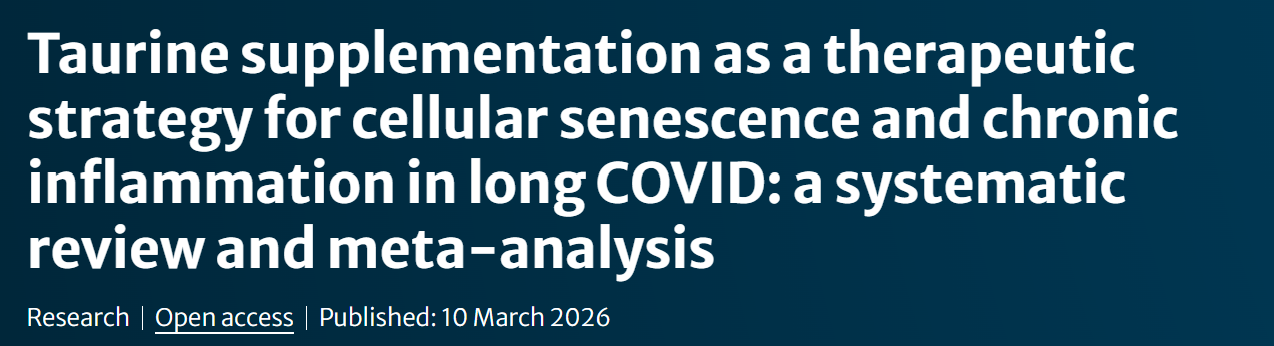
First: 27 clinical trials across 1,030 participants measured how taurine impacted metabolic, inflammatory, cardiovascular, & cognitive markers. All mapped onto pathological features of accelerated aging.
Second: 6 studies tracking plasma taurine levels in people recovering from COVID-19 compared full recoveries to those who developed long COVID (PASC). Since the SARS-CoV-2 infection triggers accelerated cellular senescence, this enables the long COVID population as one of the best models of inflammaging we have.
Study Snapshot
Who was included?
27 clinical trials, 1,030 participants
Populations: T2 diabetes, obesity, heart failure, hypertension, liver disease, dementia, psychosis
Median taurine dose: 3,000 mg/day (range: 1,000 – 6,000 mg/day)
Median treatment duration: 8 weeks (range: 1 – 16 weeks)
What outcomes were measured?
Glycemic control (HbA1c, fasting glucose, insulin, HOMA-IR)
Lipid panel (triglycerides, LDL, HDL, total cholesterol)
Inflammatory markers (CRP, TNF-α, IL-6, IL-10)
Oxidative stress (malondialdehyde)
Cardiovascular metrics (blood pressure, heart rate, aerobic capacity)
Cognition
The Findings
1. Taurine improved nearly every metabolic marker
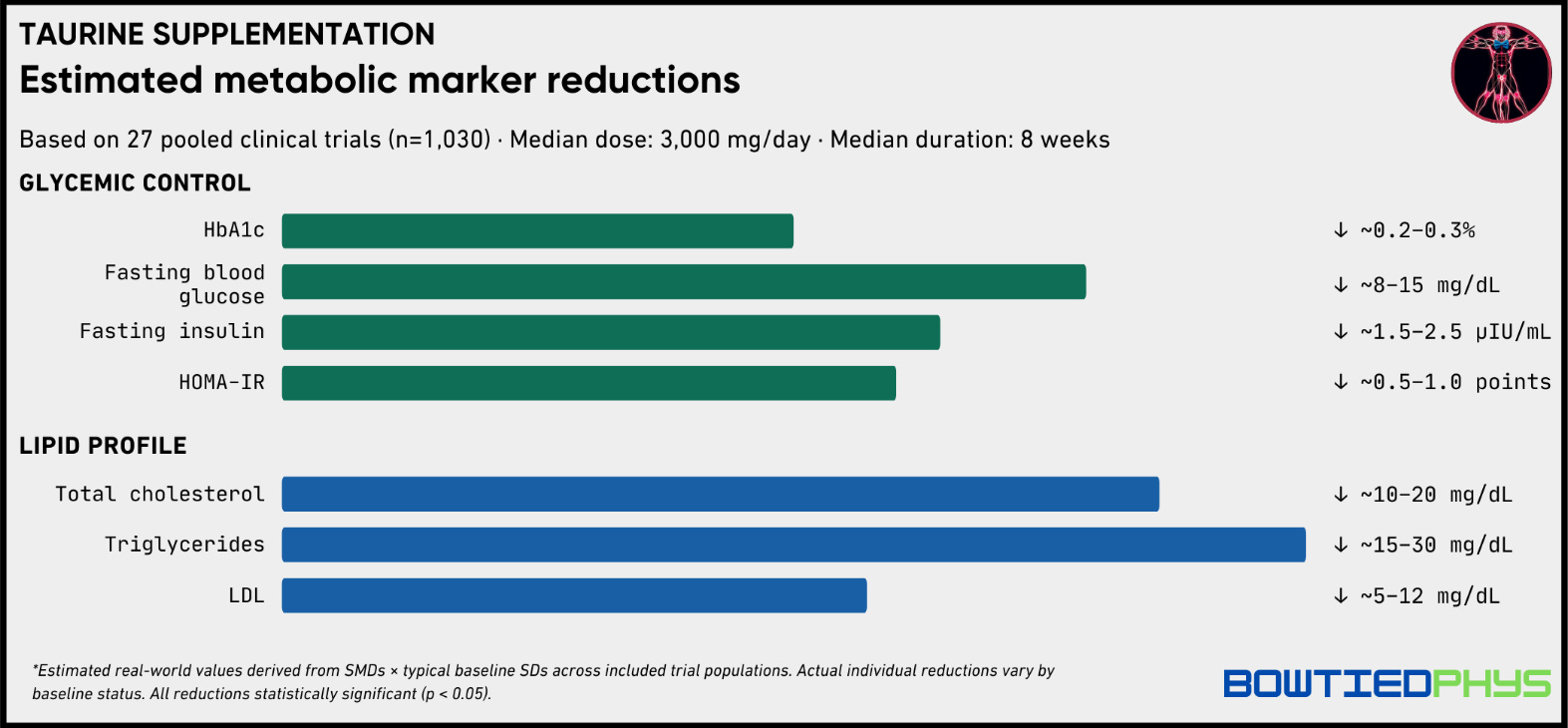
Across pooled analyses, taurine significantly improved glycemic control & lipid profiles. Here’s what the data showed:
HbA1c: reduced by ~0.2–0.3% (10 studies)
Fasting blood glucose: reduced by ~8–15 mg/dL (8 studies)
Fasting insulin: reduced by ~1.5–2.5 μIU/mL (7 studies)
HOMA-IR: reduced by ~0.5–1.0 points (7 studies)
Total cholesterol: reduced by ~10–20 mg/dL (12 studies)
Triglycerides: reduced by ~15–30 mg/dL (12 studies)
LDL-C: reduced by ~5–12 mg/dL (8 studies)
2. Taurine crushed inflammatory markers dose-dependently
CRP dropped significantly across 7 studies — estimated reduction of ~1–2 mg/L
TNF-α dropped significantly across 6 studies
IL-6 trended down across 6 studies
Malondialdehyde (oxidative damage biomarker) also dropped significantly across 6 studies
A dose-response relationship with TNF-α and IL-6 was also present. More taurine → greater reduction in inflammatory cytokines.
For inflammation specifically, 3,000 mg/day appeared to be the sweet spot balancing clinical efficacy with gut tolerability.
3. Blood pressure dropped. Exercise capacity went up.
Taurine lowered both systolic blood pressure by ~5–7 mmHg & diastolic by ~3–5 mmHg across 9 studies. And across the 3 studies measuring aerobic capacity, there was a clinically meaningful improvement.
4. Long COVID patients had significantly lower taurine
People with persistent long COVID had lower plasma taurine levels compared to those who recovered fully.
Lower taurine = less capacity to manage the inflammatory and oxidative burden driving the condition.
Why This Extends Beyond Long COVID
The implications of this go far beyond long COVID or even infections generally. The pathways taurine targets (NF-κB suppression, NLRP3 inflammasome deactivation, mitochondrial stabilization, p53-p21 senescence signaling) drive mitochondrial dysfunction, cardiovascular decline, & neurodegeneration.
Here’s the mechanistic loop:
Taurine ↓ → Reduced anti-inflammatory & antioxidant capacity → Chronic NF-κB activation → SASP amplification → More taurine consumed at inflammation sites → Greater depletion → Accelerated aging
Singh et al. (2023) already established taurine deficiency as a driver of aging across species.
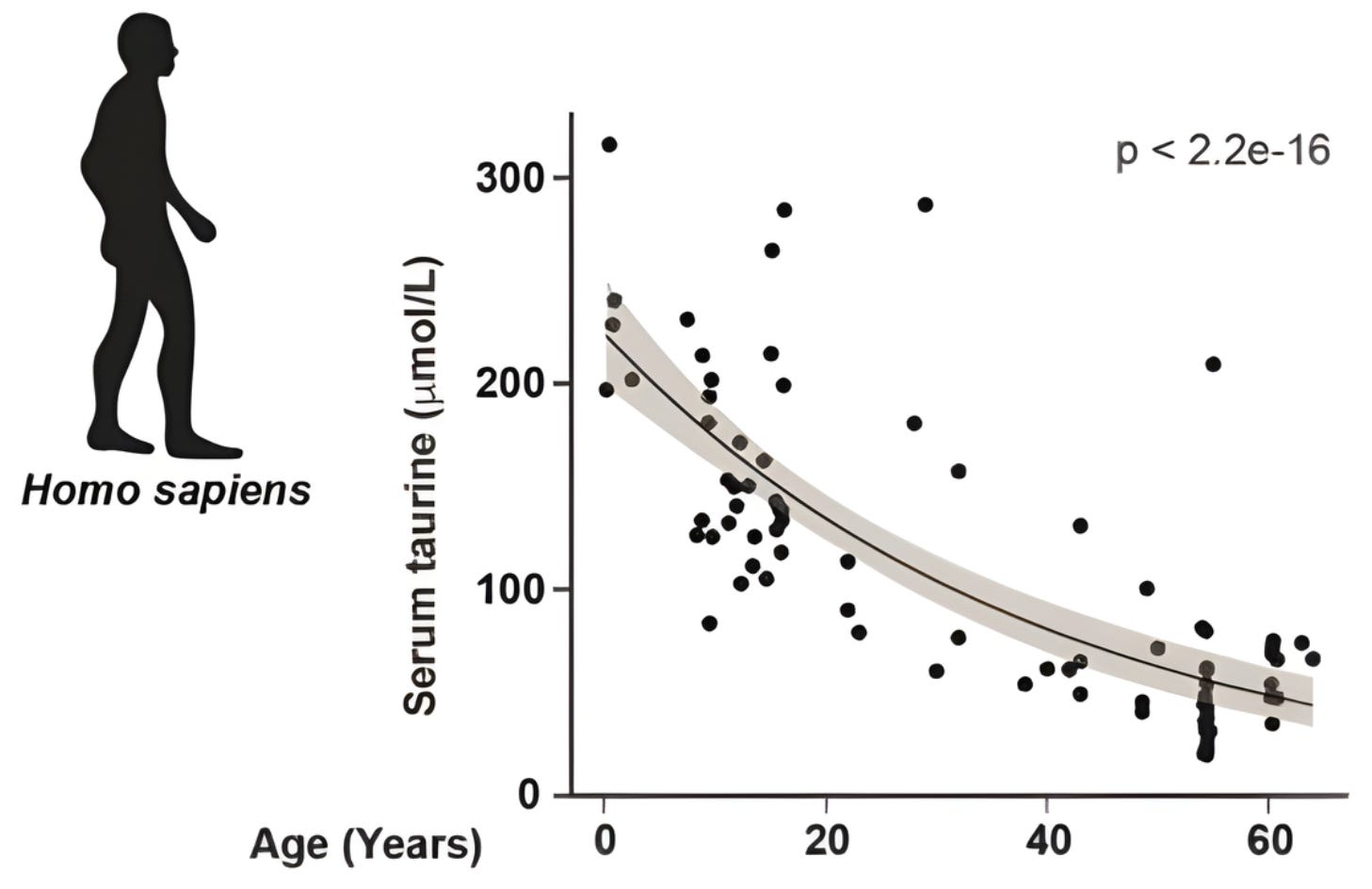
Now, this recent meta-analysis shows that replenishing taurine reverses the downstream markers of that deficiency in humans.
Practical Takeaways
1. Dose by objective
The meta-regression data and individual trial designs allow us to be more specific than a simple “take 3 grams.” Here’s how the dosing breaks down by goal:
Metabolic Optimization
3,000 mg/day for 8–16 weeks. This was the dose used in the majority of the diabetes and obesity trials (Moludi 2022, Maleki 2020, Esmaeili 2020, Haidari 2020). All of which showed significant improvements in glycemic & lipid markers.
Chronic Inflammation & Elevated Oxidative Stress
3,000–6,000 mg/day. The meta-regression showed a dose-response curve for TNF-α and IL-6 meaning benefits increased with dose.
Blood Pressure
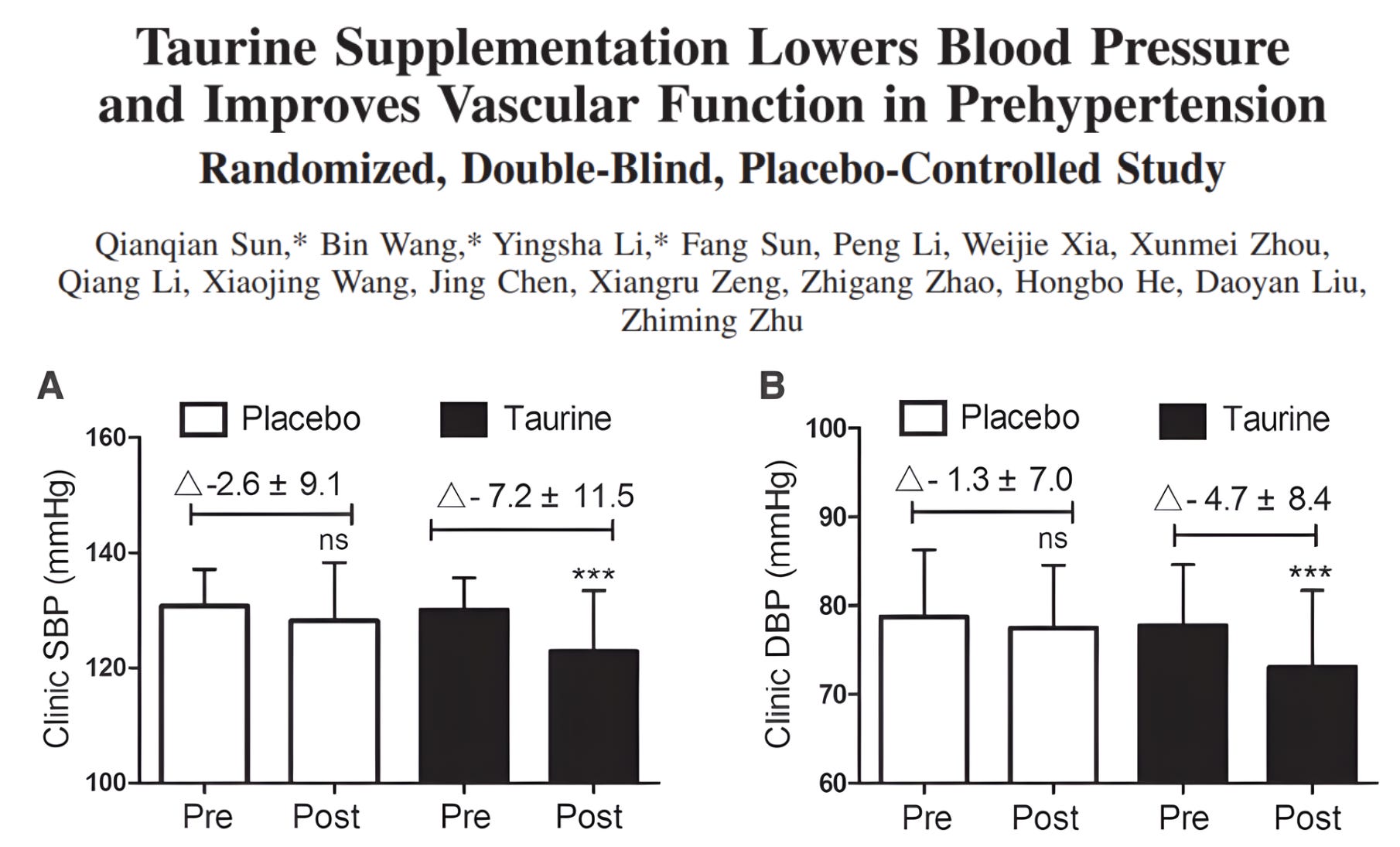
1,500–2,000 mg/day is sufficient. The Sun et al. (2016) prehypertension trial used 1,600 mg/day for 12 weeks and showed significant reductions in both the systolic (—7.2 mmHg) & diastolic (—4.7 mmHg) blood pressures.
Cardiovascular / Aerobic Capacity
1,500 mg/day for a minimum of 2 weeks. The heart failure trials (Ahmadian 2017 & Beyranvand 2011) used this dose and showed improvements in functional capacity and cardiac output.
Start at 1,000 mg/day & titrate up over 1–2 weeks.
Nootropics Depot Taurine Powder is my go-to. A third-party tested, pure powder form. At 3,000 mg/day, it works out to 165 days of supply for ~$23 ($0.14/day). What ends up being the best cost-per-outcome ratios in the supplement space.
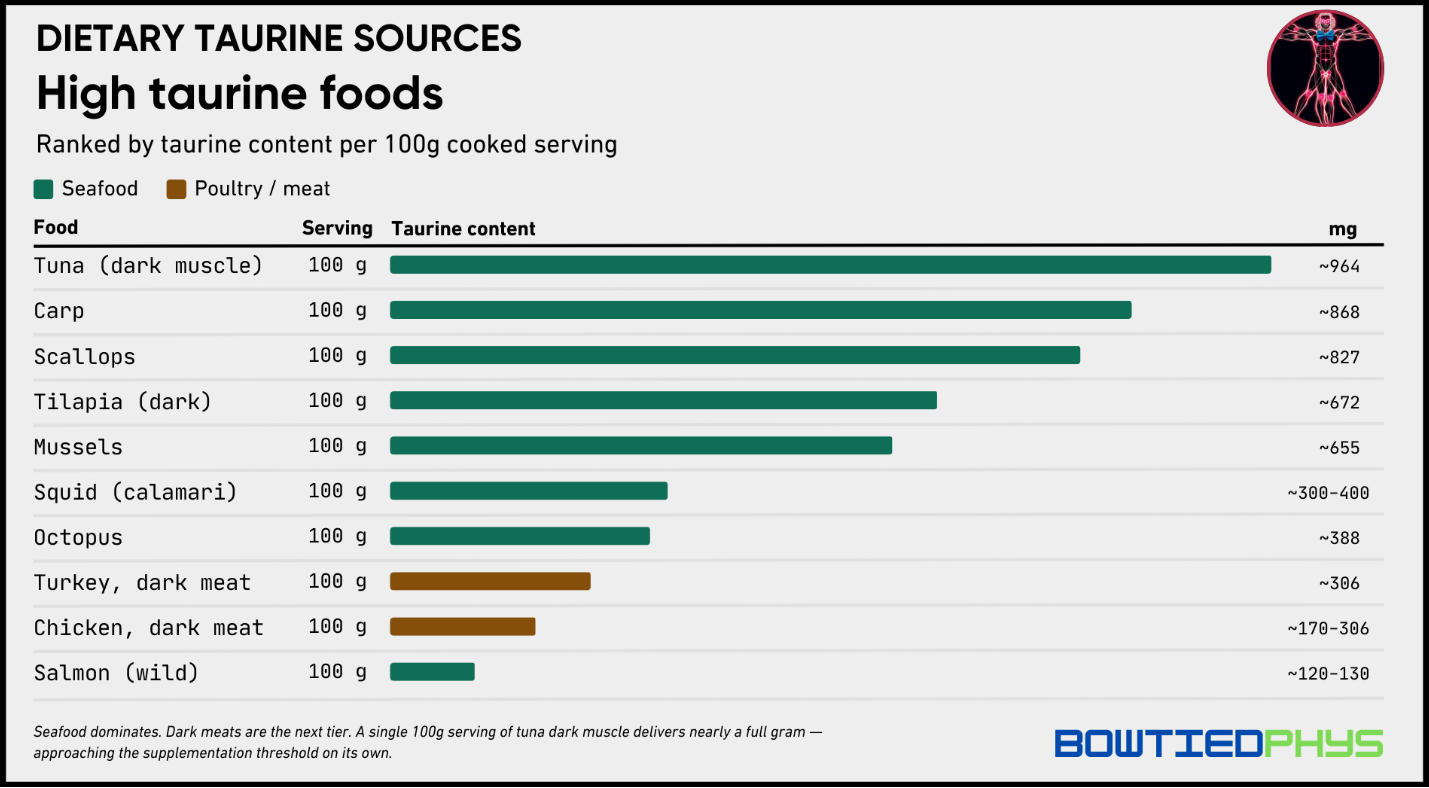
2. Food first
3. Split doses on empty stomach
Best taken on an empty stomach, split across 2 dosages with the final dose 30–60 minutes before sleep. The short half-life and renal saturation kinetics make split dosing quantitatively superior to a bolus.
4. Who benefits most
Chronic low-grade inflammation (metabolic disease, high visceral obesity, type 2 diabetes)
Post-infectious states
Aging adults with declining cardiovascular and/or metabolic markers
Diets low in wild-caught seafood/dark meat
The conventional view of aging is dominated by genes, telomeres, & time. But we’re getting more evidence pointing to the need for certain molecules to manage inflammatory states, protect mitochondria/ATP production, & suppress the senescent cascade.
Taurine is certainly becoming one of them.
This isn’t the first time we spoke of it and we doubt it’ll be the last.
Your friend,
Phys