


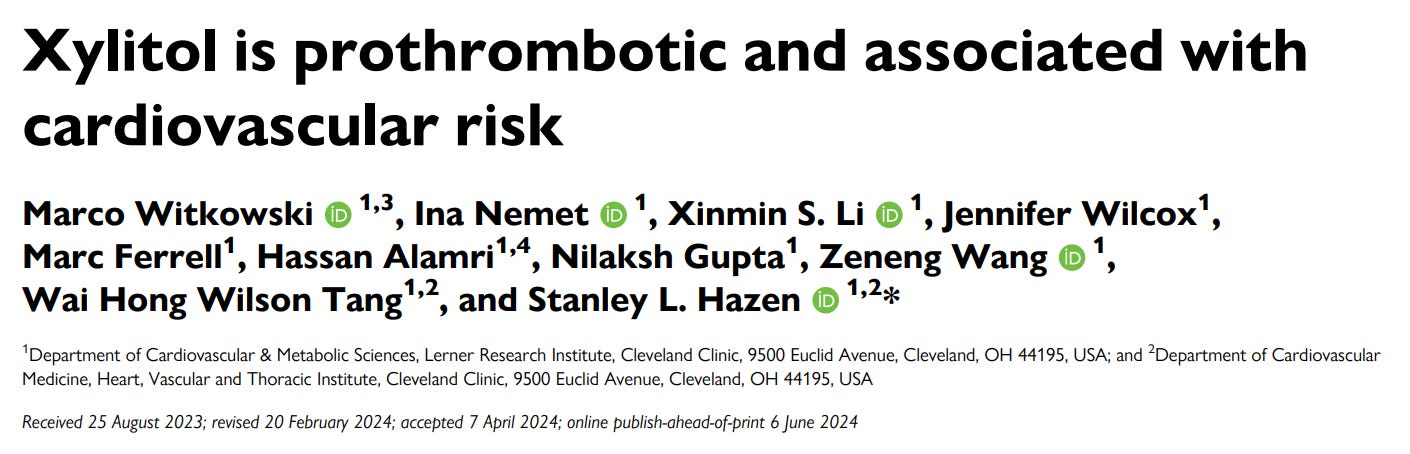
The European Society of Cardiology announced last week that xylitol might not be as safe as we once assumed.

Across 17,710 people, those with the highest blood xylitol levels had a 57% HIGHER rate of heart attack, stroke, or death versus those with the lowest.
For years, we’ve assumed the myriad benefits of xylitol for oral health were low cost:
But is there now a legitimate reason to worry the oral benefit isn’t worth the cardiovascular price?
#1: The study never measured xylitol use
Fasting plasma xylitol concentration was measured, not xylitol consumption.
The pharmacokinetics of xylitol make their conclusion sketchy at best right off the bat.
After a 30g dose, plasma xylitol peaks ~30 min, then comes back down to baseline within 6 hours.
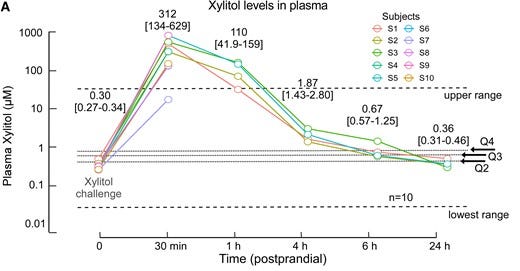
The blood samples for the research were drawn after an overnight fast of 12+ hours.
By the time the blood was drawn, any dietary xylitol the participants did have would have cleared…twice over.
The authors said it themselves in a different 2024 paper that initially stoked the xylitol fear fire: the fasting levels they measured represent endogenous production, NOT food intake.
“...the plasma levels observed in our observational cohort represent variations in endogenous production/levels and not food intake.”
A misleading component from the initial press release’s headline.
#2: Your body makes 5–15 grams per day
Xylitol gets labeled as a commonly consumed artificial sweetener, but it’s a normally present human metabolite produced at ~5–15 grams daily through the glucuronate–xylulose cycle.
A piece of xylitol gum typically has ~1g.
Before food is even consumed, the liver substantially outproduces dietary intake anyways.
#3: You’ll never guess who has the highest levels
3 big factors drive flux through the xylitol production cycle:
Poor glucose metabolism → When glucose is chronically high, excess gets sent down side routes not normally used. One of them is the glucuronate pathway that produces xylitol.
Liver burden → The liver neutralizes drugs, alcohol, & metabolic waste by tagging them with glucuronate (raw material for the xylitol cycle). So the harder the liver works to clear things out, the more xylitol produced.
Failing kidneys → Xylitol clears renally so fasting levels jump as kidney filtration declines (GFR). Dialysis patients with no residual kidney function reached serum concentrations ~10x higher than ICU patients given large IV doses with working kidneys.
Bottom line = those with the highest fasting plasma xylitol are most metabolically unhealthy
No coincidence these happen to be three of the most prominent canaries in the CVD coal mine.
#4: A natural experiment that should’ve shot this theory down
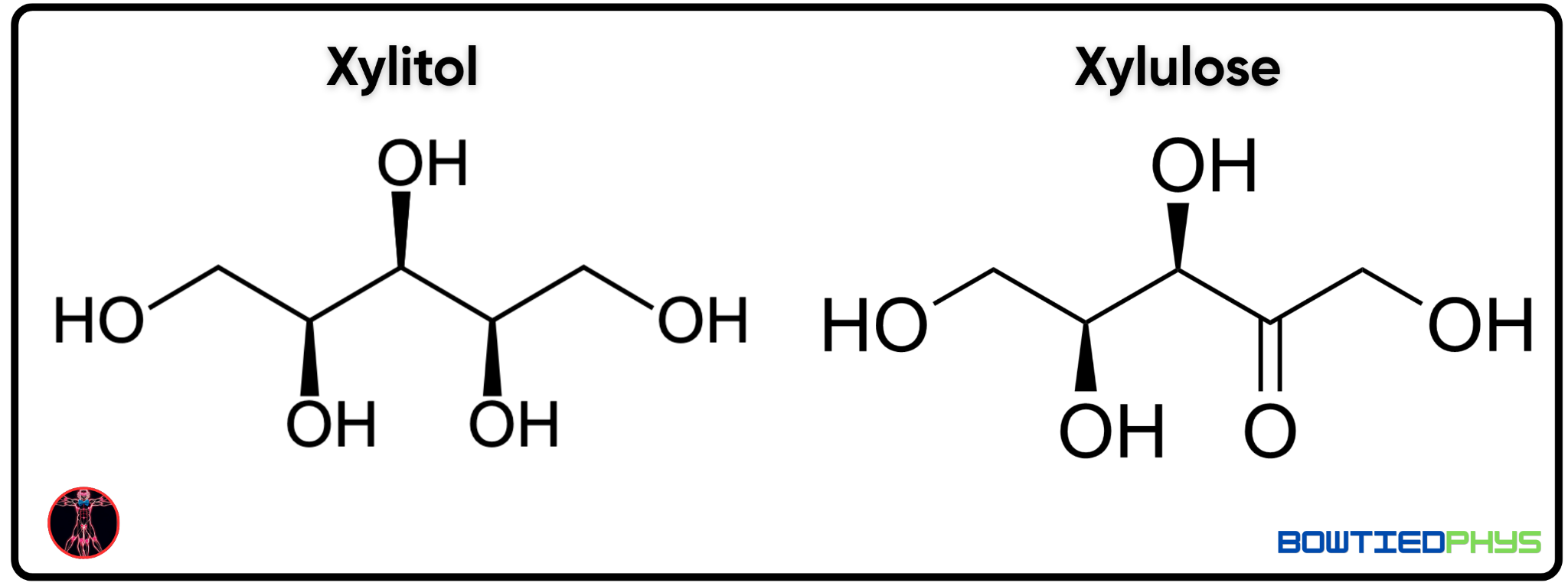
Pentosuria is a rare, inherited, but completely benign metabolic condition which causes people to excrete 1–4 grams of L-xylulose daily. They also carry plasma xylulose concentrations around 80 µM.
Xylulose is xylitol’s closest structural analogue.
The 2024 platelet experiments that generated the “prothrombotic” headline were run ~3x lower at 30 µM.
Keep in mind pentosuria is asymptomatic & harmless.
If xylitol at 30 µM meaningfully drove clotting, those with the pentosuria condition would be a disproportionately dense population of cardiac event patients…but they are not.
#5: We’ve already tested mega doses
In the early 1970s, 52 Finns lived on controlled diets using xylitol as their only sweetener. They averaged 67 g/day for 2 years. One subset was even in the 100–150 gram range with peak intakes up to 400 grams daily. No adverse events beyond occasional GI discomfort.

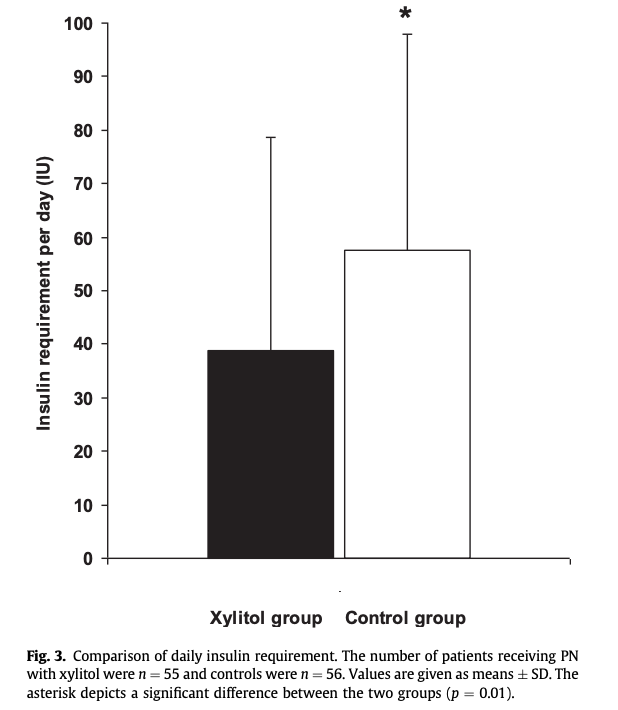
In one ICU trial, 55 patients got up to 120 g/day IV with no adverse effects and ~⅓ LESS insulin requirement than controls.
#6: Xylitol doesn’t behave like a toxin
Finally just look at the two cohorts side by side from the recent press release.
57% higher event risk over 6 years in the Canadian cohort. 18% over 30 years in EPIC-Norfolk.
The exposure and the outcome tested were the same, but the SHORTER follow-up produced ~3x GREATER effect.
If xylitol were really a vascular toxin, more exposure should mean near equal (usually greater risk) over 30 years.
Three big takeaways this week:
Approach headlines with a healthy dose of skepticism. And always keep the Sagan standard at the forefront when facing the digital zeitgeist.

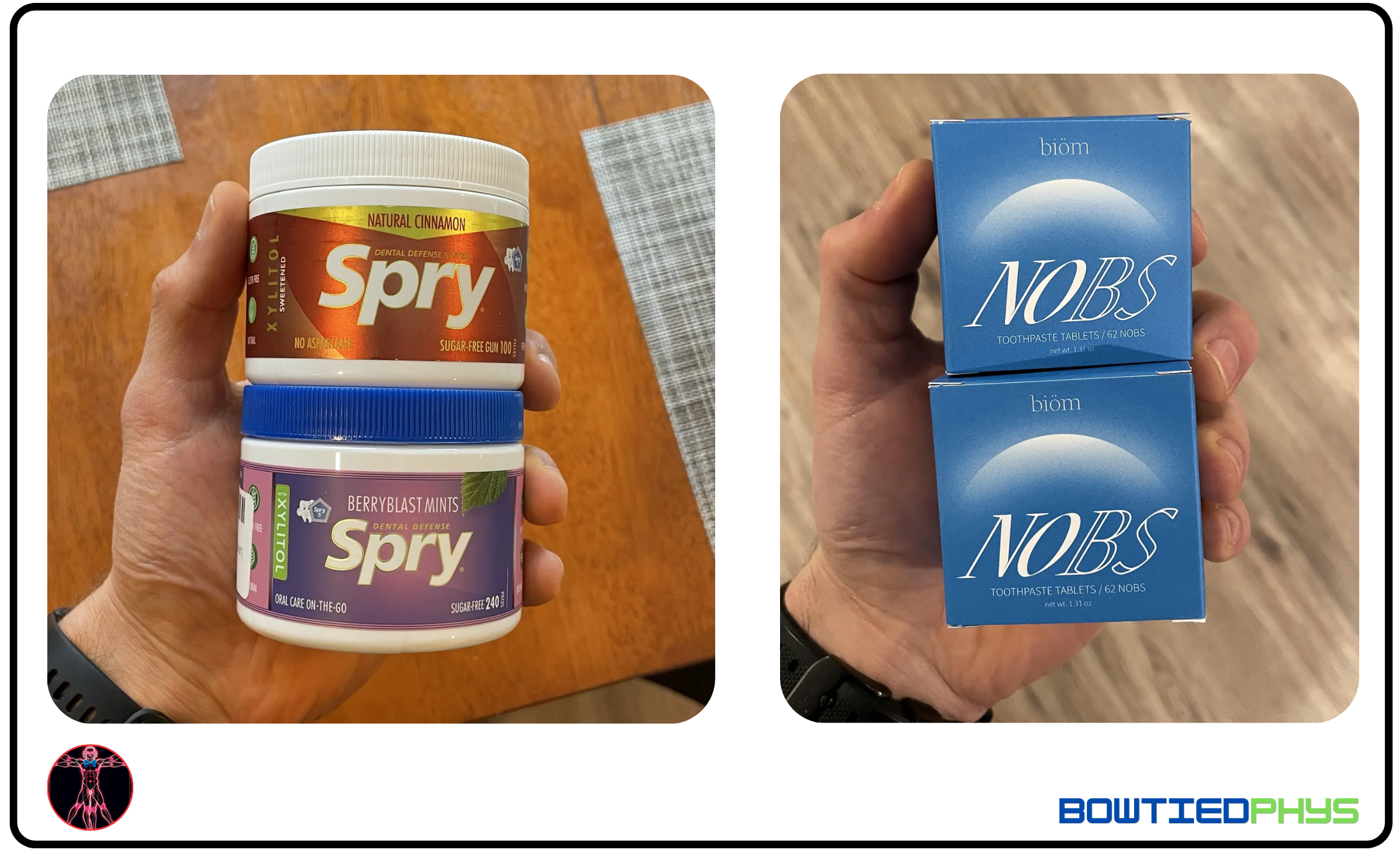
Xylitol remains in my arsenal. Gum & mints after meals. Toothpaste tablets upon waking & before bed. The proven benefits outweigh the weak, fear-inducing claims.
Recall who produces the highest levels of endogenous xylitol. This (along with so many other headlines) keep coming back to our fundamental objective here: become & stay metabolically elite. It all comes back to ENERGY. It’s all downstream of the MITOCHONDRIA.
Stay vigilant. Stay metabolically elite. And stay after it.
See you next week,
Phys
I already did.
I had a cold / sore throat and was sucking on cough sweets all day. Give me the shits. I realized it was probably the xylitol in those.
I have been using pure xylitol sweetener for my teeth after using mouthwash. Works really well and I still use it for any lingering teeth pain I get.