


Life is what we pay our attention to. It’s all we have.

Onto Instagram for “just for 5 minutes”. 30 minutes later.
Time stolen.
Brain rotted.
Attention ripped away.
Only to be left feeling spiritually drained from corrosive inaction.
A few of these experiences were enough to have spent the last 14 months documenting the art of learning focus. Tinkering with different systems, states of mind, & tactics. Determining what’s needed to stiff-arm algorithmic control & ruthlessly direct attention for maximizing agency.
Here’s exactly how to unlock a top 1% focus.
Understanding Your Attentional Architecture
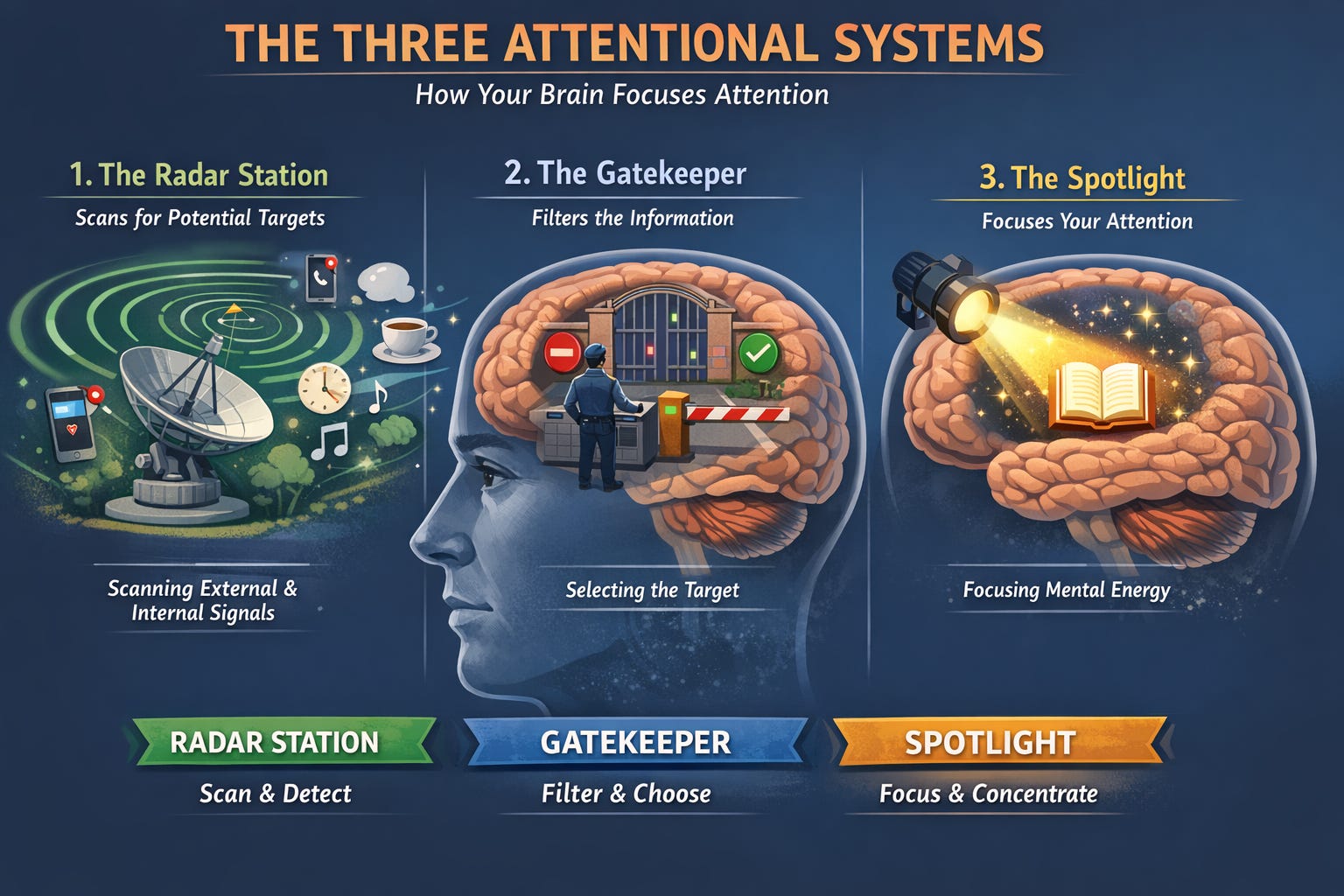
You can’t optimize what you don’t understand so let’s start here. Your brain operates on three integrated systems:
1. The Radar Station
Sweeps continuously across your external world & inner territory generating a menu of potential targets competing for recognition.
2. The Gatekeeper
Evaluates that menu & determines which target gets granted entry to your conscious awareness.
3. The Spotlight
The actual concentrated beam of mental energy you aim at the selected subject.
Why Most Focus Protocols Fail
Too extreme: “Delete all social media forever” (impractical when your job requires it)
Too neurotic: 27 different apps, browser extensions, & tracking systems (Tools are components to a system, but not the system. We use some but not to the point of tool fatigue.)
Zero progression: All-or-nothing approaches with no gradual building
Ignores root causes: Treats symptoms rather than rewiring the underlying patterns & biological systems
Lacks synergy: Arbitrary set of tactics that share no cohesiveness
We’re running this differently based on three core themes:
Progressive overload → Treating focus like a muscle by gradually increasing the challenge (discomfort).
Environmental control → Making the right behaviors automatic through intentional design by increasing the friction to the bad & decreasing the friction to the good.
Sustainable integration → Building a system you can maintain long-term, not a temporary (ineffective) “detox”.
