


You’ve optimized your light environment at night.
You’ve cooled off your bedroom temperature.
You’ve dialed in your pre-bed routine.
And yet you still wake up drenched at 2 AM in the damp sheet swamp.
Good news is we may be on the verge of validating on the best thermoregulatory tools to prevent this. A new study out of Waseda University’s Sleep Research Institute just dropped the most rigorous physiological evaluation of far-infrared (FIR) emitting sleepwear ever conducted. And the findings are worth paying attention to.
The Nishida Study
Published last month (January 2026) in Sensors, Nishida et al. did something no previous FIR sleep study had done: it measured core body temperature, sweating rate, skin temperature, humidity, EEG-based sleep staging, & heart rate variability. All in a controlled lab environment for the duration of the entire night.

15 healthy young men completed two overnight sleep sessions: one wearing FIR-emitting garments (polyester fibers embedded w/ ceramic nanoparticles emitting in the 5–20 µm wavelength band), one wearing visually identical control garments. Neither the participants nor the researchers knew which was which.
The results were promising.
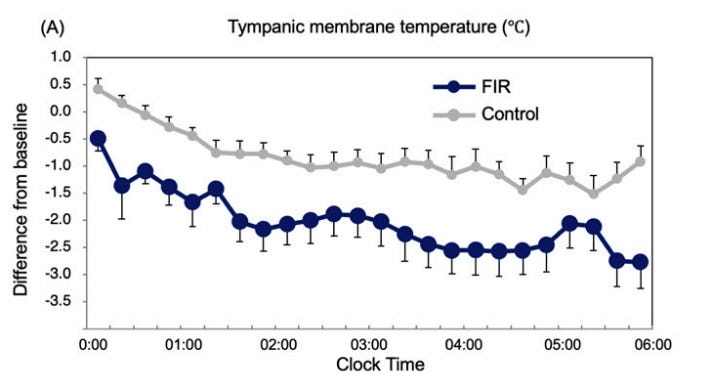
Result 1: Core temperature dropped
FIR garments produced consistently lower tympanic membrane temperature across the entire night. The decline in core body temperature is one of the most critical physiological prerequisites for both sleep onset & deep sleep maintenance. FIR garments appeared to passively facilitate this process via enhanced radiative heat dissipation on the skin.
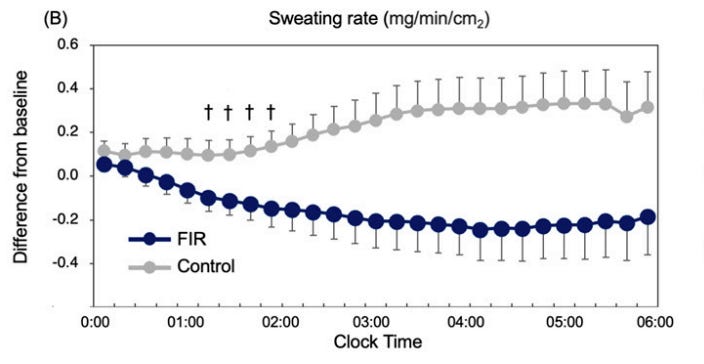
Result 2: Mid-sleep sweating decreased
A condition-by-time interaction showed reduced sweating during the middle portion of the night precisely when thermoregulatory disruptions tend to fragment sleep.
Result 3: REM sleep increased
The proportion of REM sleep was significantly higher in the FIR condition (22.2% vs. 18.6% at p = 0.027), without any change in total sleep time or NREM architecture. Though total sleep duration was steady, they subjects had better-distributed sleep favoring REM expression.
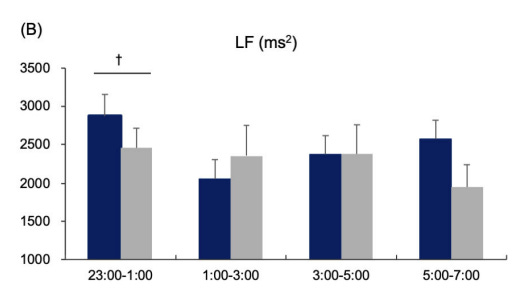
Result 4: Modest HRV improvement
A transient increase in low-frequency HRV power during early sleep reflected baroreflex-mediated cardiovascular adjustments consistent with enhanced heat dissipation, while parasympathetic tone remained stable.
No changes were observed in sleep efficiency, total sleep time, or subjective sleep quality ratings.
How FIR Garments Work
FIR-emitting textiles/garments have ceramic nanoparticles that enhance emissivity in the 5–20 μm wavelength band, which is the same range that aligns with the human body’s peak thermal radiation output. When you wear them, the fabric absorbs your body’s radiant heat and re-emits it, promoting peripheral vasodilation and more efficient radiative heat exchange at the skin surface.
Now you might think — the cooler, the better…but there’s a Goldilocks zone to the thermoregulation game that FIR supports.
When falling asleep, your body wants to shed core heat through the skin (especially at the hands & feet). Raymann et al. (2008) demonstrated that even subtle manipulations of skin temperature (as little as 0.4°C) can increase sleep depth and reduce the probability of early-morning awakening.
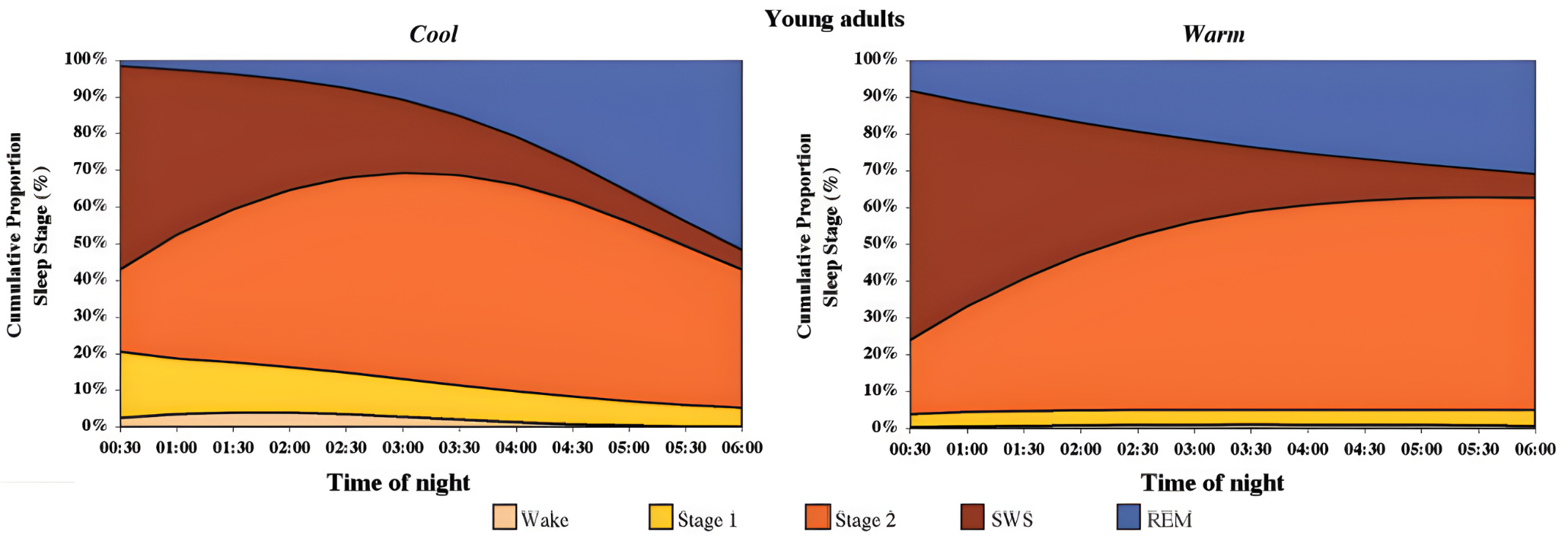
Unlike active cooling systems, mattress pads, or just general climate control, FIR sleepwear operates at the skin-textile boundary itself.
Further Supporting Evidence
The Nishida study didn’t emerge out of nowhere. Several prior investigations laid groundwork, but each had significant limitations relative to what the Waseda team explicitly addressed.
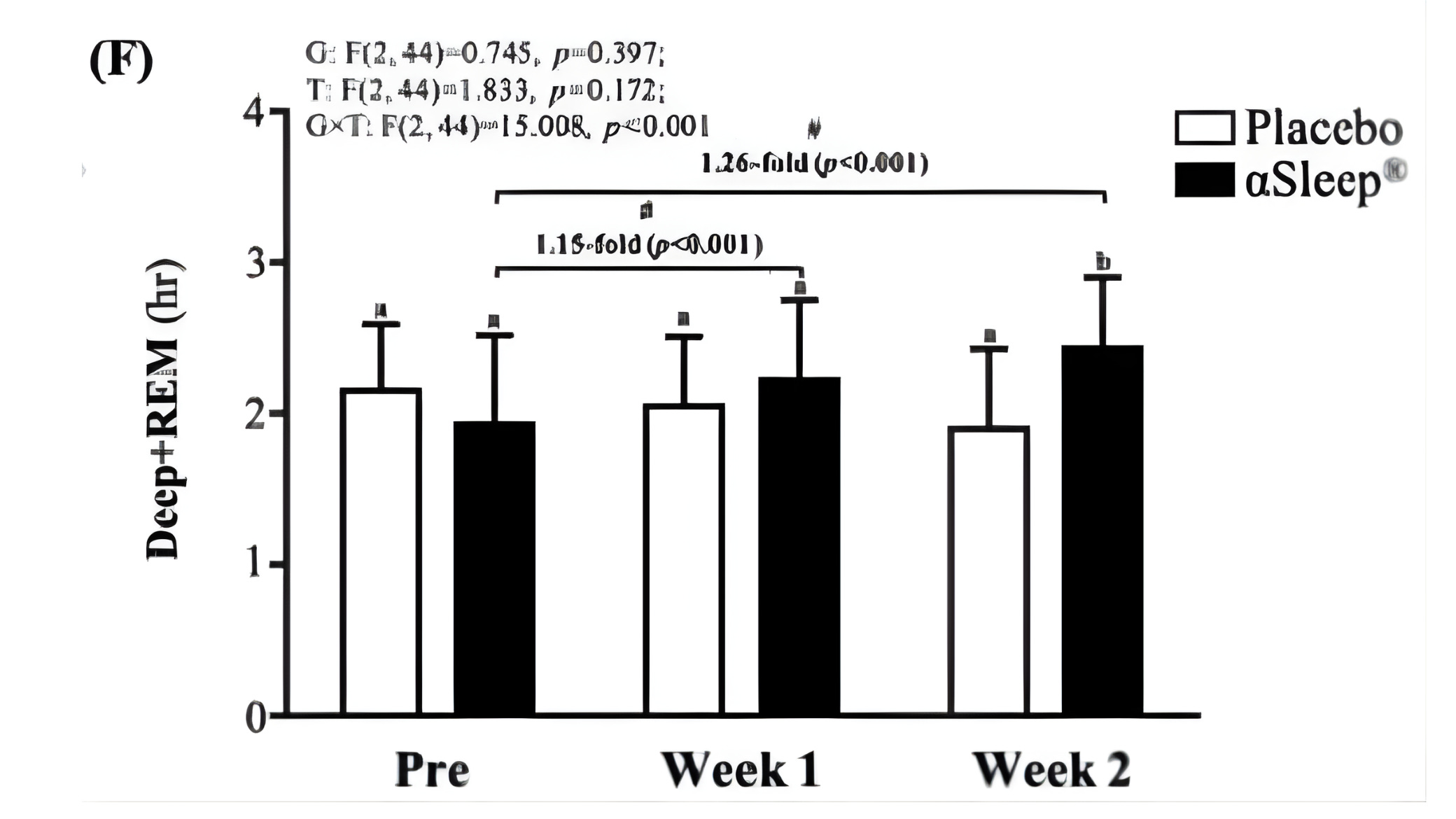
Lee et al. (2024) evaluated a FIR-emitting blanket over 14 days in middle-aged men. The FIR group showed a significant 28% increase in combined deep sleep plus REM time compared to placebo with a large effect size.
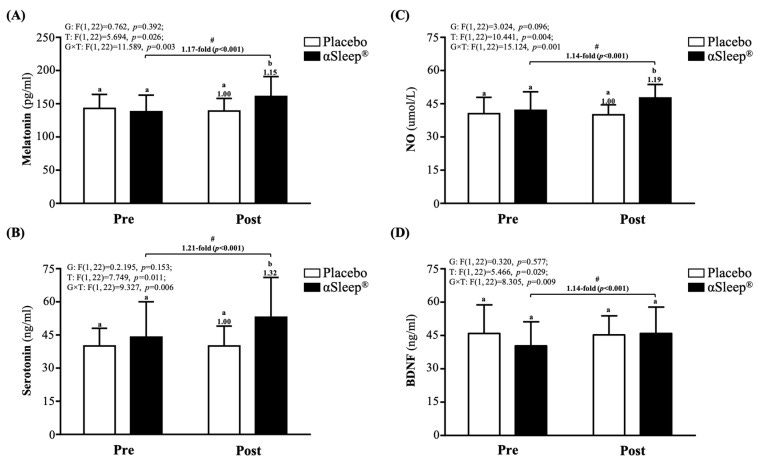
Even more notably, blood serotonin, melatonin, BDNF, & nitric oxide concentrations all significantly increased in the FIR group.
Bontemps et al. (2021) also published a systematic review examining FIR-emitting garments specific to sport performance and recovery. It highlighted that FIR garments’ greatest potential was through their effects on thermoregulation and hemodynamic function.
Our Interpretation
The Nishida study is the best representation of the FIR impact on sleep. They explicitly framed their results as demonstrating “physiological feasibility, rather than clinical efficacy.”
FIR garments subtly improve the thermal microclimate during sleep through passive radiative mechanisms, but they don’t overhaul your sleep. It’s a fine-tune of the thermal environment.
Our hypothesis runs like this: if you’re thermoregulatory-challenged at night, FIR blankets/garments can be especially promising. If not, the impact will be marginal.
A reminder: no single tool will ever be a replacement for the fundamentals (circadian signaling + light environment + nervous system regulation), but improved development of FIR as a thermoregulatory tool shows promise in enhancing how well you sleep.
As always — we’ll keep an eye on developments in the future & stay up-to-date on the latest here.
Your friend,
Phys
Is there a Fir blanket on the market you like? Or just a finding to keep an eye on
There doesn't seem to many of these products on the market